In every game store these days you’ll find countless sequels dotting the shelves, yet for some gamers there are a bevy of retro classics that deserve the revival treatment instead.
These days retro gaming has never been bigger or more accessible. Each week, tons of oft-forgotten gems of yesteryear join the highly-populated downloadable services of Microsoft’s Xbox Live Arcade or Game Room, Sony’s PSN and Nintendo’s Virtual Console.
Yet for many retro titles this is the highest notierity they can hope to achieve, as too few games get either the full HD release treatment or long-awaited sequel they thoroughly deserve. And in the unfortunate case of quite a few games that do (the Wii version of Sega Saturn classic NiGHTS springs to mind), it’s usually a case of ‘be careful what you wish for’.
For us at JOE, however, there was so many retro classics that shamefully haven’t returned in over 10 years, that we decided we had to make a list and put the pressure back on as best we could. Here are our top five series ripe for either remakes or sequels:
5. Pikmin series – Nintendo Gamecube
Pikmin is not just notable as one of the few original properties created by Nintendo in the past ten years, it’s a unique title that showcases the somewhat oddball thought process of the Kyoto giants’ chief visionary, Shigeru Miyamoto, creator of Donkey Kong, Super Mario and the Legend of Zelda series.

Oh, how we miss those cold, dead eyes staring back at us
Many of Miyamoto’s biggest hits have sprang from his own real-life experiences and passions, whether it was exploring caves as a child (which influenced Legend of Zelda) or attempting to launch foxes and amphibians into outer space (Starfox, and yes, we’re kidding). For Pikmin, Miyamoto has admitted that his newfound fondness for gardening drove him to create the seemingly backyard-set strategy title. Controlling and ordering three varieties of alien/plant hybrids known as Pikmin, players were tasked with a set time limit and daily cycle to find parts and rebuild their crashed spaceship of Captain Olimar.
With the constant threat of nocturnal predators and the awe-inspiring sight of your subservient Pikmin battling any or all enemies, even against overwhelming odds, Pikmin was an exhaustingly tense and at times heartbreaking experience. Released in 2001, Pikmin received an even better-received sequel three years later, yet the series has gone into hibernation ever since, bar two unaltered Wii re-releases. Nintendo have hinted heavily at a possible Wii sequel, though the series staple gameplay seems suited to a stylus, so hopefully if the series does return, it’ll be on the glasses-free phenomenon that Nintendo 3DS is sure to become.
4. Blast Corps – Nintendo 64
Before they became a surprisingly meek Microsoft-owned studio (churning out little bar Kinect Sports and the Viva Pinata series) in a $375m sale, Rare were the pride and joy of Nintendo, revitalising Donkey Kong with the eye-popping Super Nintendo series Donkey Kong Country and producing instant classics in the 64-bit era, such as 007 Goldeneye, Perfect Dark and Banjo-Kazooie. Amidst the glory era of the English studio’s development, the Nintendo 64 console, Rare quietly released Blast Corps in 1997, a game whose high concept hasn’t been challenged in all the years that have since passed.

This was our favourite mode of transport – the Jet-Pack!
A highly original release, Blast Corps tasked players to destroy a series of buildings using a variety of unique demolition vehicles, in order to mainly clear a path for a truck carrying a pair of defective nuclear missiles. And we’re not talking conventional vehicles here – while a few levels involve use of an actual bulldozer, you’ll find yourself at the controls of jet-pack enabled robots that can stomp through skyscrapers at will. Jet-pack. Robot. Explosives.
Despite, or perhaps in spite of its incredibly original concept, Blast Corps struggled to find the audience despite excellent reviews. When you consider that the title, Rare’s first Nintendo 64 release, had to hold its own against first-party monster hits of 1997 such as Super Mario 64, WaveRace 64, Lylat Wars and Mario Kart 64, perhaps that’s not such a surprise.
These days, despite murdering the goodwill established from previous titles with disastrous Xbox 360 reboots of Perfect Dark (Perfect Dark Zero) and Banjo-Kazooie (Banjo-Kazooie: Nuts and Bolts), Rare fans are still clamouring for a Killer Instinct 3, rather than a Blast Corps 2. Considering the studio’s recent output, perhaps it’s best this explosive series is left unexplored, yet we still say a downloadable HD remake wouldn’t go amiss.
3. Chrono Trigger – Super Nintendo
For most Japanese RPG fans, the 16-bit era remains the golden era for the genre, though for European gamers it’s difficult to agree when you consider that while our friends across the pond were exploring the vast worlds of Final Fantasy VI or Super Mario RPG, we in Europe missed out on numerous AAA releases. Even now, it’s baffling to consider that perhaps the biggest hit on the Sony Playstation, Final Fantasy VII, was the first in the series to reach Europe. For most RPG fans, however, the all-time classic Japanese RPG was developers Squaresoft’s effort two years previous, Chrono Trigger.

With a previously unheard of emphasis on sidequests and multiple endings, Chrono Trigger was a cut above all over Super Nintendo RPG releases, in particular due to its wonderfully implemented time travel gameplay mechanic. With a captivating and not overly complex plot, Chrono’s success and legacy were eventually built upon the player’s desire to replay the title and see what permutations their actions may cause for the game’s eventual ending.
Time has been kind to Chrono Trigger, which was recently released in nearly-identical form for the Nintendo DS. A Playstation sequel, Chrono Cross, followed in 2000 and won rave reviews, though once again it wasn’t released in Europe. Ten years have since passed and the Japanese RPG scene is in dire need of resuscitation – a Chrono Trigger sequel would cause waves of excitement within the industry and help demonstrate that the genre shouldn’t be written off so easily. A European release would help too.
2. Jet Set Radio – SEGA Dreamcast
At the turn of the last decade, skate boarding and inline skating were both absolutely enormous, while Activision’s Tony Hawk franchise was taking its first tentative steps to dominating the burgeoning market. SEGA and developers Smilebit took one look at the powerful youth market that was being created and developed one of the most instantly recognisable, achingly cool franchises in recent memory, Jet Set Radio.

Jet Set’s graphics hold up remarkably well over ten years later
Pioneering a 3D cartoon-like art style with it’s cel-shaded graphics (which were to dominate the industry for years to come, most notably in Nintendo’s bold Legend of Zelda: Wind Waker installment) and featuring a vibrant Shibuya, Tokyo setting, Jet Set Radio could easily have been style over substance. Instead, the game was a unique time-attack-based graffiti title, encouraging players to chain skating moves together while avoiding the police and eventually full S.W.A.T teams. An excellent soundtrack from Jurassic 5 and the ability to import and export graffiti tags online didn’t hurt replayability either.
Released on the back of huge hype (including the prime award for the industry’s biggest event, E3’s Best in Show), Jet Set Radio hit the Dreamcast in 2000, while its follow-up, Jet Set Radio Future, followed on Xbox two years later. With a number of Dreamcast titles planned for PSN and Xbox Live Arcade releases (with just Crazy Taxi on both services as of this writing), plenty of rumours abound that Jet Set Radio is set to follow. Whether or not a full next-gen sequel can be expected is a little less likely, though personally the amazing potential of a full open-world online city of inline skating troublemakers hurts to even think about.
1. Shenmue series – SEGA Dreamcast
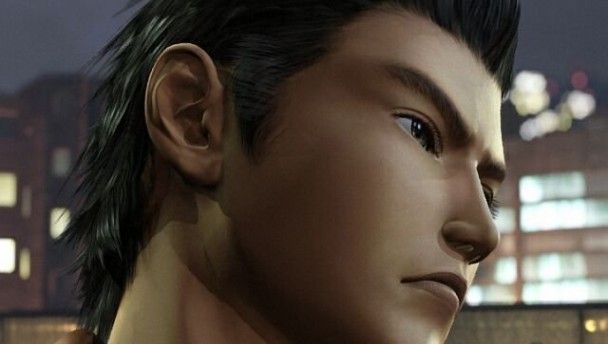
As if any other series could top this list. When the SEGA Dreamcast strode onto the scene as undisputedly the most advanced video game console of all time, Shenmue was its killer app. Released in 1999 and produced and directed by SEGA’s greatest game designer Yu Suzuki (creator of Virtua Fighter, Daytona USA, Virtua Cop and Out Run amongst others), this 1986-set tale of revenge was also the most expensive video game of all time. When his father is killed at the family dojo, mullet-wielding protagonist Ryo Hazuki vows to avenge his death to the silken villain Lan Di. He also vows never to remove his fancy brown leather jacket and jeans combination too, which we fully endorse.

The only way to decide who got the fork-lift operator job was to make the applicants race one another
Despite the set-up for a classic revenge story, Shenmue is best remembered for its sheer mundane tasks and settings. Originally envisioned as an epic seven-game story, the storyline plodded between the city of Yokosuka and its main town of Dobuita. Whether you’re saving kittens, playing classic SEGA titles in the arcade or getting a job as a fork-lift operator, Shenmue was an amazingly diverting title that also pioneered quick-time-events, scripted playable cut-scenes that required accurate button combinations, a feature which Heavy Rain decided to make an entire game from in 2010.
Despite its hype and massive budget, Shenmue underperformed at retail and some believe was an accelerating force in SEGA’s eventual withdrawal from console development. Shenmue II eventually made it to the Xbox in 2001 and cranked up the action level and shifted locations to Hong Kong. Despite receieving stellar reviews once more, the dastardly Lan Di has still not been seen since flying away on a helicopter from the Walled City of Kowloon in the game’s third act.
Rather cruelly, rumours of Shenmue III refuse to die, despite the fact that much of the series’ original development team regrouped to create the fairly similar Yakuza series, which is a huge success in its native Japan. As for Shenmue, the most recent news on the series has been the announcement of Shenmue City, a Japanese-only PC-based social game in which details are painfully light as of this writing. With Shenmue II now celebrating ten years since release, it would be a great disservice to this once-mighty series if Ryo Hazuki has given up his epic quest to engage in sub-par Facebook battles instead.
LISTEN: You Must Be Jokin’ podcast – listen to the latest episode now!