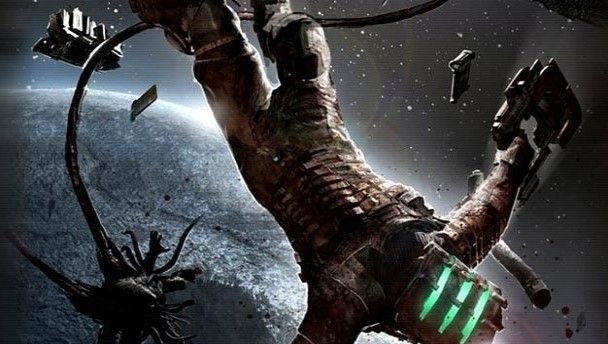
In space, no-one can hear you scream. Yet playing Dead Space 2, your cries of horror are sure to give your neighbours many sleepless nights.
Much like the shuffling of couches and coffee tables that heralds a session on Microsoft Kinect, Dead Space 2 demands an optimum setting. With 5.1 surround sound, an empty house save for yourself and the lights turned off, Visceral Games’ sequel jangles the nerves in a way no current generation series can rival. Yet over two years after the original Dead Space shocked gamers everywhere and pointed the way forward for the survival horror genre, can its sequel, a known quantity, hope to do the same?
Set three years after the events after the events of Dead Space, DS2 puts gamers behind the shoulder of protagonist Isaac Clarke, who has been woken up bound to a straitjacket on the Sprawl, a metropolis space station orbiting one of the moons of Saturn. Much like its predecessor, Visceral propels players into a dizzying opening sequence filled with Necromorphs, pitch-black corridors and crucially, no weapons until at least 20 minutes into the frst chapter.
DS2 has already been touted by many as the ‘Uncharted 2 of the survival horror genre’ and it’s actually a well-considered comparison. Much like Uncharted’s transformation, here Isaac is brought to the forefront more than ever, with full voice-acting from our protagonist and greater emotional gravitas towards his plight.

Break-ups are always tough…
Similarly, the action proponent of the series are amped up on every level, with bravura set pieces that bookend each chapter, involving everything from trams to helicopters. The low-key indication that a new chapter has begun (literally a quick text flash on the screen) tends to be wonderfully at odds with the breathless action that typically came before it just moments ago.
While creeping through the surprisingly varied environs of the Sprawl, the series additions pile on top of one another. A press of the right analogue stick leads to an illuminated path towards your objective or save station, ultra-claustrophobic sequences find you crawling through the station’s vents, fully navigable Zero-G environments, enemies that charge like rhinos but plot in tandem like velociraptors – behind every corner is typically a new enemy or gameplay mechanic, if only turning that corner wasn’t such a terrifying prospect.
Ah yes, the scares. For many gamers, where Dead Space 2 will succeed or fail depends on the series unique ability to unnerve its fans at every turn. With a newfound reliance on action beats and far less forboding locations (a ruined metropolis can’t match the atmosphere or desolation of a derelict mining vessel, variety or not), it’s unfortunate to report that DS2 is marginally less frightening in comparison to the original.
With a greater emphasis on ‘jump’ scares this time around, players are still constantly on edge throughout, while Visceral pick their moments well – a long corridor with multiple opening appears extremely harmful, so you run the full length instead and can’t believe your luck when no enemies appear. It’s the spots when you least expected an attack that you end up having to fight off a Necromorph from two feet away. Sure, it’s a relatively cheap way of encouraging scares, but DS2’s developers are to be commended for constantly confounding player’s expectations.

We’ll be sure to thank Visceral for creating packs of rabid Necromorph children. Thanks guys
For many Dead Space fans, the most eye-opening inclusion of Dead Space 2 is the same decision that was deemed ‘unnecessary’ by online warriors within minutes of its announcement – a Left 4 Dead-style Necromorphs vs Soldiers multiplayer mode. In practice, DS2’s multiplayer is an intriguing proposition, in that depending which side you play as, you’re in for a widely differing gameplay experience. Human characters are rewarded by sticking together, completing objectives and saving their fellow comrades whenever possible.
In contrast, Necromorphs (with four to choose from) have no set goals other than wiping out their opposition and their objective progression as gruesomely as possible, coupled with the ability to choose their respawn points and burst from vents. Whether or not the multiplayer component holds up in months to come is an unknown but quite unlikely – although the mode is a diverting experience, as of this writing the Necromorph characters are bitterly underpowered in comparison to their weapon-clad opponents, while a dearth of maps doesn’t help.
Slightly disappointing multiplayer aside, nothing should be taken away from Visceral’s singleplayer achievements. Every inch of DS2 is soaked in atmosphere, blinding presentation and unrivalled sound design. Dead Space pioneered a ‘no HUD’ visual style and similarly, its sequel benefits from a number of surprisingly intuitive gameplay decisions – when ammo is scarce in panicky situations, you may have to hold your nerve and rely on using kinesis to pull claws from dead Necromorphs and fire at your attackers. It’s a messy job but somebody has to do it.
Certain writers have already made the link that Dead Space 2 is to sci-fi sequels what James Cameron’s Aliens was to Alien – a little less scary but an action-packed, atmospheric bold new step that grips from start to finish. We’re not going to argue with that – it’s only January but we already feel confident in saying that Dead Space 2 could be a strong contender for 2011’s eventual game of the year. If that sounds a little familiar, we said the same thing for Mass Effect 2, released the same weekend one year apart and our eventual 2010 winner.

Format: Xbox 360, Playstation 3, PC; Developer: Visceral Games
LISTEN: You Must Be Jokin’ podcast – listen to the latest episode now!