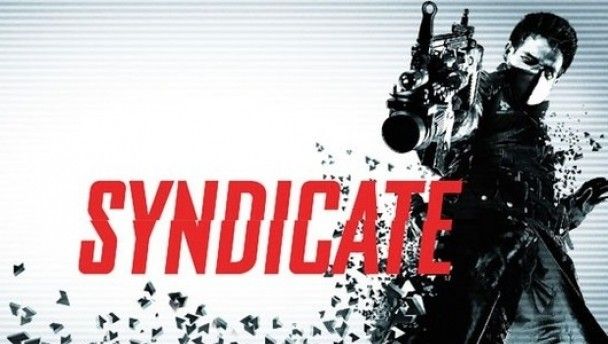
19 years after Syndicate first stunned gamers, the tactical classic has returned as a first-person shooter. Have EA made a wise choice or a horrible mistake?
When word reached that the 1990s tactical game classic Syndicate was to return 19 years after its debut as a first-person shooter (what else?), you could literally sense the eyes of the world’s gamers rolling on a near-continuous loop.
Both publishers EA and developers Starbreeze Studios went on the defensive immediately, insisting that the core of the original series’ ideas and features (evil corporations, android-like augmentation, persuading others to do your bidding) would all be present and correct. They are – to an extent – but the result is a game which may not be remembered twelve months from now, never mind 19 years.
The 2012 version of Syndicate casts players in the hands of Miles Kilo, an agent of mega-corporation (“Syndicate”) Eurocorp in the year 2069. Early missions involve spreading the reach of Eurocorp by infiltrating rival corporations, taking out researchers and in order to obtain their lucrative data (and spend an obtainable slot to augment your abilities), extracting a chip from their heads. Amidst this shady business are wealthy Eurocorp CEO Jack Venham (voiced by Brian Cox) and a young, attractive scientist named Lily Drawl (Rosario Dawson). We’ll give you five seconds to decide whether the eventual narrative arc asks you to side with the wealthy old man or the pretty scientist…
Where Syndicate attempts to differentiate itself from typical sci-fi shooters is through Miles’ ability to hack enemies and see through walls – Batman: Arkham City ‘Detective Mode’-style – through the use of his prototype DART 6 chip.
Hacking is initially thrilling and involves turning enemy gun turrets under your control, convincing enemies to commit suicide, join your side or for their guns to backfire, allowing you a few seconds to get a shot in. An early set piece involves hacking and retracting areas of cover for your enemies during a firefight, though such novel instances are few and far between.
The main problem with Syndicate is that the mission structure ensures that the storyline and narrative potential is kept at a distance in favour of nearly endless gunfights. While last year’s Deus Ex: Human Revolution mined similar story material – namely the question of what it means to be human in a world of neural chip implants – Syndicate has entire missions pass by with no breakthroughs other than in the form of invisible enemies. Really, invisible enemies – in 2012?
The gunfights are so thick and fast that it’s possible they were implemented so readily as a way of padding out the game’s 8-10 hour single player lifespan. In fact, one set piece in the penultimate mission of the game had at least eight rounds of 5-6 new enemies entering via elevators, one after another, as if we had suddenly activated a Horde mode by accident.
The biggest low point in Syndicate, however, is the same as that of its spiritual brother, the aforementioned Deus Ex: Human Revolution – boss fights. Here each boss fight represents an unforeseen difficulty spike, with unique methods of success needed against enemies that represent the worst of the game’s shooting tactics. Take the first boss, who can not only dodge bullets Matrix-style, but can also turn into five separate versions of himself and carries a gun which shoots around corners, making finding cover worthless.
Had we not went for broke and pummeled him early with grenades from our weapons alternate firing mode, we wouldn’t have finished this review, as the disc would’ve been crushed to smithereens long ago.
Co-op goodness
There is, however, a lone bright spark in the Syndicate experience – a terrific four-player co-op mode that arguably should have been the prime focus of the game’s marketing team.
With unique story-based missions and absolutely required teamwork (players can heal their teammates via hacking and if everyone dies, it’s mission over), each aspect of Syndicate’s shooting design comes together in a truly unique experience. If anything, it makes us wish that the single-player campaign involved Eurocorp teams throughout, whether they were controlled by online players or the CPU.
So while Syndicate has a few tricks up its sleeve, its biggest problem is that for a game which has adopted the title of an iconic and largely unrelated series, it has very little to say, very little to offer and in its worst moments, very little reason to care. Ultimately the Syndicate license deserved better and after close to a decade, so did its fans.

Format: Playstation 3, Xbox 360
Developer: Starbreeze Studios; Publisher: EA
LISTEN: You Must Be Jokin’ podcast – listen to the latest episode now!