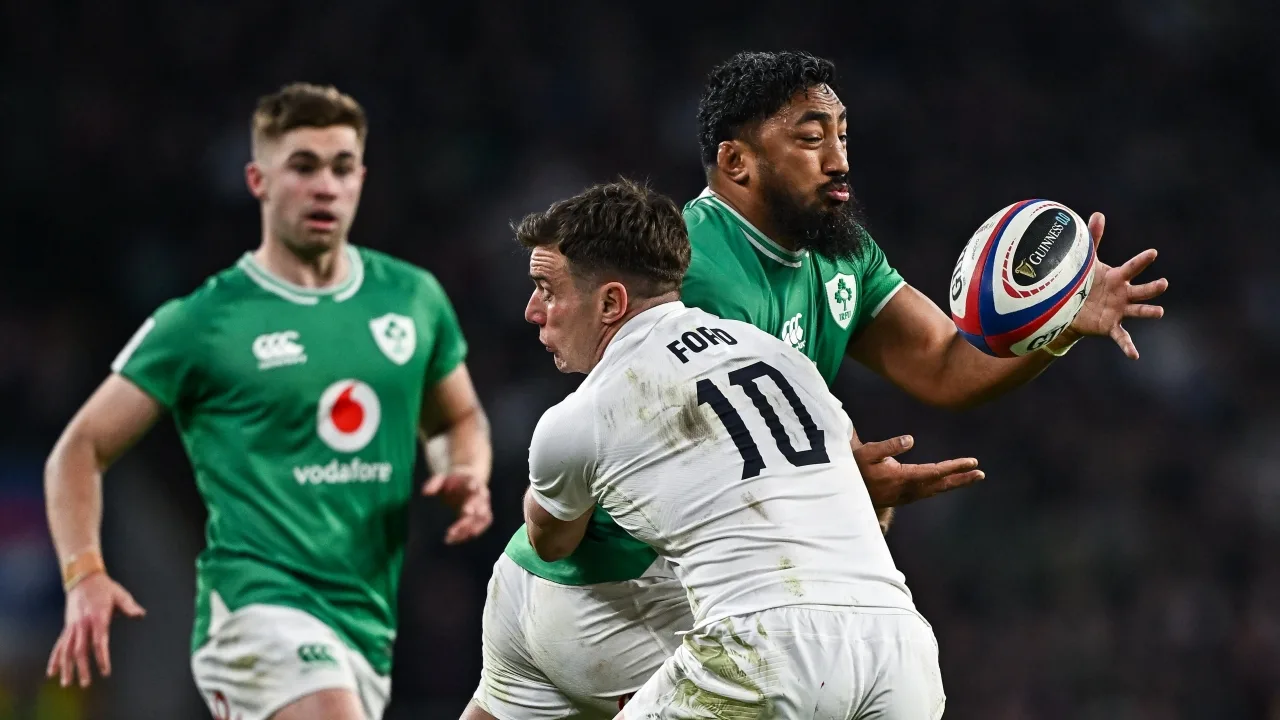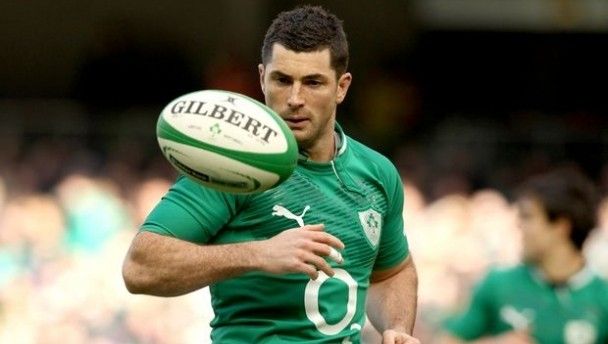
Ahead of Ireland v France this weekend, we look at potential changes at half back and the back row and the need to knock the rampaging French down a peg in the opening exchanges.
Can Ireland keep it tight at the start?
Keeping it tight for the first 20 minutes or so is a phrase more commonly associated with soccer. It has certainly been adopted as a maxim by our current boss Giovanni Trapattoni, even if he prefers the game to be kept tight for somewhere in around 90 minutes as opposed to the first quarter of the game.
Although not often used in rugby parlance, it is extremely relevant this weekend as not only has Paris been a graveyard for Irish ambitions down the years, we’ve more often than not been beaten out the gate before half-time.
On our last three visits to the Stade de France in the Six Nations, Les Bleus have had 14, 13 and 25 point half-time leads built up, a nigh on unassailable gap when you consider both the opposition and the venue.
Declan Kidney will be painfully aware of those statistics and although he is often lambasted for being overly conservative, playing the game in the French half, slowing the ball down wherever possible and keeping French attacking opportunities to a minimum will be imperative in the opening stages on Sunday.
France have made back-row changes, should we be doing the same?
While we’re sadly lacking in depth in other areas – the front row being the obvious one – Ireland are certainly not lacking for options in the back row.
Individually, the three men currently occupying the starting berths are among the most talented on the continent, but there are many who still question their ability to dovetail into an efficient back row unit.
Sean O’Brien and Stephen Ferris were magnificent at the World Cup, but Jamie Heaslip seemed to suffer because of their prominence. The absence of an out-and-out seven was widely lamented in the wake of both defeats to Wales and although we wouldn’t always place much relevance in the opinions of George Hook, who is blue as opposed to his usual red in the face talking about it, it was interesting to hear Keith Wood on Off the Ball this week talking up the promotion of Peter O’Mahony to the back row in a move that would Sean O’Brien switch to number eight.
It bears remembering that Ferris, O’Brien and Heaslip are a relatively new combination and may still prove to be a formidable one, but the fact that Philippe Saint-André doesn’t mind switching around players of the calibre of Julien Bonnaire and Imanol Harinordoquy shows that Kidney shouldn’t look upon change so cautiously if it is indeed necessary.
Is Eoin Reddan a touch hard done by?
It’s fair to say that Ireland looked pedestrian until the introduction of Eoin Reddan for Conor Murray on Saturday and although it could have been down to Italy losing energy and interest in the closing stages, Reddan certainly had something to do with the increase in tempo and Ireland’s subsequent flourish towards the end.

Eoin Reddan made a huge difference against Italy last weekend
Leinster’s use of Isaac Boss for particularly tough-looking away assignments shows that Reddan is not exactly trusted to provide physicality – a department in which Murray is certainly not lacking – but Jonathan Sexton seems to play better with Reddan by his side and seeing as he seems to be our first-choice out half these days, the promotion of one Limerick man for another could be for the greater good.
Will the curse of Clerc strike Ireland once again?
The mere sight of Vincent Clerc is enough to cause panic stations amongst Irish rugby fans, so we have a degree of sympathy for Andrew Trimble, who’ll be facing him directly on Sunday afternoon. Clerc has actually failed to score against Ireland in the last two Six Nations matches between the sides, but that means that his record is now seven tries in seven matches against us which, in case you don’t remember, includes a hat-trick in 2008.
He might be getting on a bit, but the man is still a machine. He was the joint top scorer along with Chris Ashton at the World Cup and 31 tries in less than 60 appearances represents a quite incredible return. Wesley Fofana might be doing great things and the returning Clement Poitrenaud is a major threat, but all Irish eyes will be on Clerc. History insists that it must be the way.
If anyone can, Kearney can
O’Driscoll, O’Connell and O’Gara have traditionally been the go-to men when it has really mattered for Ireland in recent years, but Rob Kearney seems to be fast assuming the match-winner mantle. The safe hands and positional qualities that made him so effective in the Grand Slam winning and Lions teams of two years ago have remained intact, while he has also added an attacking thrust that was previously deemed to be lacking from his game.
Kearney has been outstanding in both games in the competition so far and looks every inch the captain in waiting when the big two eventually call it a day. When Kidney is looking for potential match-winners on Sunday, he won’t have to look far past the first name on his team sheet. And for all you cheeky pedants out there who instantly suggest that Cian Healy will be wearing the number one jersey, the full-back is always listed first.
LISTEN: You Must Be Jokin’ podcast – listen to the latest episode now!