Rarely has any one player had such an influence on the Heineken Cup winners as Leinster’s Rocky Elsom, arguably Irish rugby’s most successful import, did in 2009.
While there have been plenty of duds too (Steven Sykes anyone?), there have been a number of successful foreign imports into Irish rugby over the last decade or so.
The likes of Dougie Howlett, Isa Nacewa, Brad Thorn and Johann Muller immediately spring to mind, but in terms of the impact made relative to his time in Ireland, Rocky Elsom is certainly up there with the best of them after his remarkably productive stint with Leinster during the 2008/09 season.
The Aussie was already a big name in Southern Hemisphere circles and had amassed loads of caps for the Wallabies by the time he shacked up in Dublin, but despite the reputation he had established for himself, few would have predicted the phenomenal impact he would make en route to Leinster’s first Heineken Cup success.
It would be grossly unfair to attribute Leinster’s transformation from also-rans to hardened Heineken Cup campaigners entirely to Elsom’s arrival because they had been taking those steps in the seasons before he arrived.
Still, for a time there had been a sort of pretty boy reputation surrounding them when it came to the elite level of competition, that they knew how to play rugby once they got the ball to their multi-talented back division, but they lacked the ability to grind it out, that they didn’t have the street smarts to win the day when the going got tough.
It was one of the reasons why Leinster cast such envious glances towards their southern neighbours for most of the last decade and it was a trait which was perhaps best brought home to roost when they were demolished by Munster at Lansdowne Road in the 2006 semi-final having won away to Toulouse in such thrilling fashion in the quarters.
Michael Cheika had gradually been developing Leinster into a meaner outfit – a meaner outfit still well able to play ball, mind – and the arrival of Elsom proved to be the final piece in the jigsaw in the run-up to the 2008/09 season.
Leinster have one of the best back rows in the business now, but three years ago, Sean O’Brien was still an emerging talent and Jamie Heaslip wasn’t the established international he is today. It would be overstating things to say that O’Brien and Heaslip came of age that season – O’Brien was an unused sub in the final – but they sure as hell learned a thing or two from their Aussie colleague.
Throughout that campaign, Leinster came out on top in a number of games you felt they might have lost in the past. Never was that more true than in the infamous ‘Bloodgate’ quarter-final against Harlequins that finished 6-5, a very un-Leinster like scoreline, when Elsom led from the front as always.
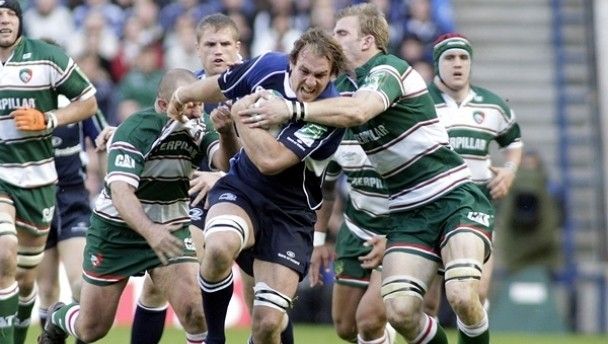
The semi-final win over Munster was far more comfortable than one would have expected but again in the final, things got tight and against Leicester Tigers it was never going to be another way.
Rocky rose to the occasion once again, however, winning the man of the match award as Leinster won and began a period of dominance in the competition which yielded two of the next three titles. For an idea of the kind of impact he made in the final, check out the clip below.
Unfortunately that was to be Elsom’s last contribution in the Heineken Cup and in Leinster colours but he could hardly have had a more significant impact during his time in Ireland.
He won the European Player of the Year and Magners League Player of the Year awards, was voted as man of the match on 14, yes 14, occasions and was selected on both the Magners League and Heineken Cup dream teams.
Brian O’Driscoll described him as the best he’s ever played with and coming from someone like O’Driscoll that’s high praise indeed.
Even now, the mere mention of the name Rocky Elsom still brings with it a degree of reverence in Irish rugby circles, particularly with his former province, and there were even murmurings about a potential return at one stage last year, a return which never materialised.
The name Rocky brings with it obvious connotations and it could have been used as a stick to beat him with if he didn’t make a success of his time with the Blues, but that was never a worry.
He was a champion and he made Leinster champions too.
LISTEN: You Must Be Jokin’ podcast – listen to the latest episode now!