Some of your questions have been answered.
It’s the case that has the world hooked but if you’re one of people that isn’t familiar with ‘Making A Murderer’ on Netflix then look away now.
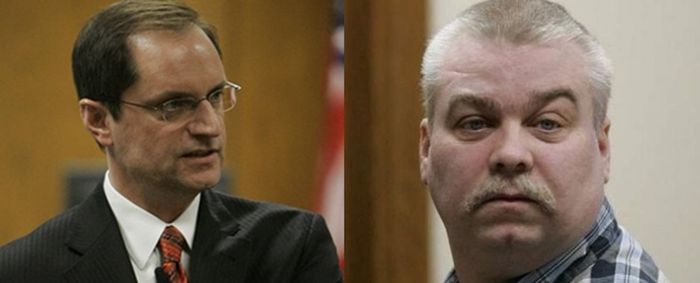
Steven Avery may have new legal representation but one half of his defence team – and the new darlings of the Internet – Jerry Buting has given a very interesting interview with Rolling Stone where he talked about Avery’s legal options, the recent allegations made by Jodi Stachowski and the idea working with Dean Strang again.
Here’s some snippets from the interview.

On working with Dean Strang again to defend Steven Avery…
I don’t know. There’s an attorney who has been speaking with him, and did a press release saying that she was going to be taking over the case. I have not spoken to her, nor him, so I don’t know if that’s really the case, and if that will continue to be the case.
We will try, and we’ve been sort of informal advisors. We stepped back during initial direct appeal so that there could be a set of fresh eyes to look at the evidence, to look at things we did, see if we made mistakes that might have been serious enough to jeopardize his right to effective assistance of counsel. That’s typically what happens — the trial attorney is not usually the same attorney who then does the direct appeal.
What Twitter looks like right now. #MakingAMurderer pic.twitter.com/cpJ9eXJwck
— kate briquelet (@kbriquelet) December 29, 2015
On Steven’s legal options…
People often think, Well, you know, if the jury got it wrong, that somehow that will be fixed on the appeal. In fact, our appellate system and criminal justice system is really designed not to get at truth or justice in a case, really it’s designed to perpetuate a conviction. The finality of a judgment in 98% of cases — very few cases ever get reversed on appeals.
It’s very difficult. There are a few exceptions in the interest of justice, but a lot of times it’s hard to do that. Once you get past what’s called a direct appeal, which will be your appeal in the court of appeals and the state supreme court, if you haven’t succeeded by that point then you have a harder row to hoe, but it’s not impossible.

On Jodi Stachowski’s recent allegations…
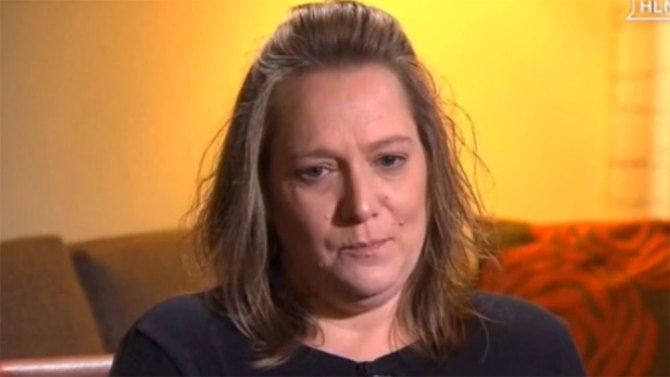
Realize that there was a fair amount of coverage with Jodi [in the documentary]. She was getting a lot of pressure, even while the trial was going on, to try and turn her away from Steven Avery. It’s many years, who knows what kind of pressure and influences have been exerted against her to try and make express that kind of opinion.
Bottom line is that when things were contemporaneous, happening back during that time, she did not have that opinion. She was very supportive of him. So, why is she changing her opinion? I don’t know at this point. I think that the documentary showed that she was not going to be a reliable witness.
She was not called at trial in part because of that — because she had been arrested three times by the police and interviewed to try and get her to change her story and she never did.
On why Steven didn’t testify…
I can’t discuss attorney-client decisions and communications, so I can’t answer that directly. All I can say is that in every case it’s always a difficult decision whether or not a defendant should testify. There’s pros and cons either way. Sometimes people don’t testify because they’re not educated, articulate, good witnesses.
They’re not like police officers who are professional witnesses, who testify all the time, and go to school to learn how to be witness.
Sometimes people don’t testify for a whole lot of other reasons, including when a defendant testifies, sometimes what happens is the jury has a tendency to sort of weigh the defendant’s testimony against the state’s case and say ‘Which is more believable or plausible?’ and base their verdict on that when, in fact, the law says you’re not supposed to weigh the defense against the prosecution.
The prosecution has all of the burden — beyond the reasonable doubt — and you’re supposed to see whether the state has proven their case to that very high degree of certainty. When the defendant testifies, sometimes that makes it harder for the jurors to do that.
On the other hand, if a defendant doesn’t get to testify, people are like, ‘Well, why not? What does he have to hide?’ The bottom line is that they have a constitutional right not to testify.
https://twitter.com/iamjoonlee/status/686360094494298113
LISTEN: You Must Be Jokin’ podcast – listen to the latest episode now!