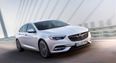
The modern day Octavia shows that when the Germans mount a takeover in the Czech Republic, it doesn’t always have to end badly.
Her name was Brenda, and she lived down the road from me. The corner house, next to the park.
Brenda used to drive an ageing, rear-engined, underpowered Skoda Estelle. It was sky blue, made a rumbling noise, and people from miles around would flock to drive slowly behind Brenda in her little runaround.
That last point may not be strictly true. Sure, there was a always a row of traffic behind Brenda’s little Czech-built Skoda, but that had more to do with the fact that the Estelle rarely, if ever, made it out of second gear.
Brenda had learnt to drive after her husband had passed (that’s passed on, not passed his test) when she must have been about 70 (she was probably nearer to 50, but when you’re a young ‘un older people do seem a lot older).
Anyway, Brenda’s cautious/annoying driving coloured my view of Skodas for many years. For me, that sound of an approaching clattering Estelle accompanied by the sound of the horns from Brenda’s frustrated followers became synonymous with the Skoda brand.
Then in 2000 Skoda was sold to VW, and everything changed. Not for the first time, a group of Germans in sharp suits marched into Czechoslovakia and instilled a sense of order, although things were a lot less sinister the second time around.
Apparently Renault had put in a higher bid for Skoda, but the French motoring company were seen as too closely linked to the French State, and since Skoda had been a State-run Czech company that had been operating at a loss, this led to the Czechs going with the German automotive giant.
It’s believed that Renault would have gotten rid of the somewhat tarnished Skoda name (Brenda’s car wasn’t the only one to move around slowly and noisily…), but VW kept the name and made Skoda the entry brand to the prestigious group.
It was a brave but ultimately shrewd move. The VW connection soon became clear – like their German cousins, Skodas became reliable and solidly built. But by keeping the Skoda badge, VW could keep the cost of the cars down without cheapening the VW brand and the people working in the Skoda factory in Mladá Boleslav could feel proud of the Czech-made car they were making.
Since the takeover, Skodas have got better and better. Cars from the pre-VW days, the Fabia and Octavia, kept their names but saw significant changes. They were joined by new additions such as the Yeti and the world’s least modestly named car, the Superb.
Sturdiness
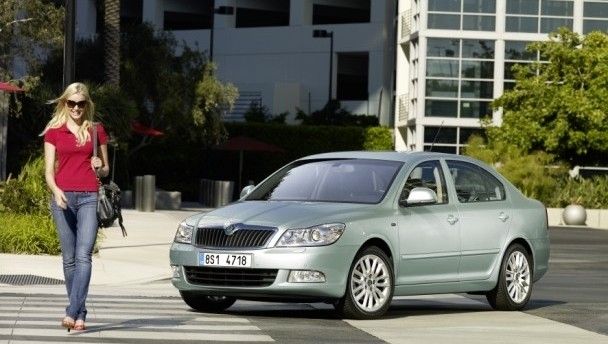
The Skoda Octavia that you can buy in 2011 gives you VW sturdiness at a cut-price cost, but has a fair few more bells and whistles than you’d expect.
Externally it’s not the most desirable looking car; if you’re feeling really generous, the angular nature of the bodywork can at a push be called ‘retro’, although I doubt that was the intention. Unfortunately, what passes for cool in the Czech town of Mladá Boleslav doesn’t travel particularly well. The great designers working in the VW group clearly stick to the VW, Audi and SEAT brands. I’m guessing that the person shipped down to the Czech Republic to design the exterior probably sports a mullet and a moustache and wears a shell suit. That said, these things are always a matter of personal taste.
Inside it’s not bad at all. Maybe not luxurious, but nor is it simply functional – in the version of the car I’ve been whizzing around in, the 1.2 DSG, there’s a touchscreen multimedia console that works really well, a self-dimming rear-view mirror and partially leather seats.

In fact, there are a plenty of gizmos that are either fitted as standard or as optional extras. These include rear parking sensors, a multi-function steering wheel, dual-zone climate control, an iPod auxiliary jack and rain-sensing wipers (all standard). As options you’ve got such things as leather on the seating, 17” alloy wheels and headlamp washers.
If you look at a row of taxis, there’s a good chance that at least one of them will be an Octavia, which says a lot for their keen price, their spaciousness and their fuel efficiency. It also says a lot for their engineering, as taxi drivers are hardly likely to go for a car that can’t cope with being driven hard or that will need to spend most of its time in the garage.
The Octavia 1.2 DSG Elegance 105 bhp petrol model I’ve been road testing benefits from having the running costs of its 1.2 litre engine, you’d think it’d be too small an engine for the size of the car, but it behaves more like a 1.6.
The car features an efficient direct-injection engine, which lowers consumption and improves performance. There are also two diesel versions available – a 1.6 TDi and a 2.0 TDi that fall in Tax Band A and Tax Band B.
The ‘DSG’ part of the car’s name refers to the 7-speed automatic gearbox. The Direct Shift Gearbox (DSG) features two clutches and two input tracks – what this means is that you get the same fuel efficiency and CO2 levels as a manual transmission car. Basically, the one clutch handles odd gear changes, while the other looks after even gears and reverse. You can also smoothly go through the gears using the paddles on either side of the steering wheel.
And in a marked change from the rear-engined Skodas of the past, the engine is incredibly quiet. When standing still, it’s virtually silent.
My test car with its optional extras costs €22,425 and falls into Tax Band B (€156). It has a maximum speed of 192 km/h, uses an average of 5.9 litres per 100km and takes 10.8 seconds to get from 0-100km/h.
If you’ve got a young family, or if you need a bit more space in your chosen vehicle, and you don’t have the money to spend on a VW (or simply don’t want to spend too much) then you should seriously consider the Octavia.
Little more than ten years ago, driving a car with a Skoda badge meant you didn’t mind driving a crap car that would make you the butt of a fair few jokes. These days it shows you’re a shrewd man who likes to drive VW quality but doesn’t want to pay too much to do so.
LISTEN: You Must Be Jokin’ podcast – listen to the latest episode now!