The recession has many of us swapping exotic trips abroad for staycations. Not to worry – there are plenty of outstanding sights right here on our fair isle. To start with, here are JOE’s Seven Irish Wonders.
By Robert Carry
Glendalough

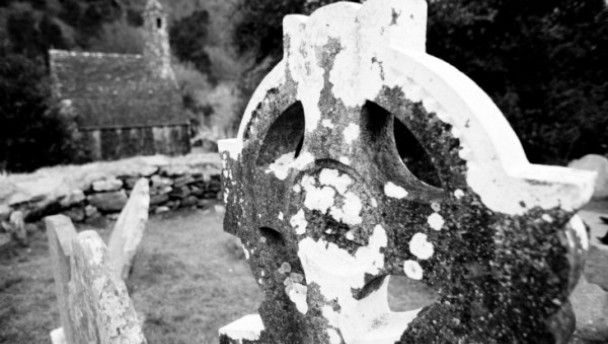
90 minutes south of Dublin city centre in the Wicklow Mountains is the stunning Glendalough. While most wonders can be clearly pigeon-holed as either a natural or a man-made wonder, this particular gem is deserving of both titles.
Sixth Century holy man St. Kevin, a descendent of one of the ruling families of Leinster, chose this exceptional, twin-laked glacial valley as the location for a monestary. It flourished for the following 600 years before being ransacked in 1398.
The ruins, the most notable piece of which is an intact 34-metre round tower, are strung along one of the most scenic walks you’re likely to find anywhere in Northern Europe.
Glendalough, which once constituted a massive religious and cultural settlement featuring churches, monastic cells, workshops, a cathedral, guesthouses, and even a health centre, gives visitors a look at what the barbarous Irish were really like before the arrival of the Normans.
Click here for more information.
Rock of Cashel

In the heart of Tipperary is the iconic Rock of Cashel, originally built as the seat of the High Kings of Munster. Although little remains of the original buildings, it is believed to be the site where Aenghus, King of Munster, was converted to Christianity by Saint Patrick in the 5th century. The site was gifted to the Church in the 12th century and most of the well-preserved buildings date from that period.
The remarkably well-chosen location for the construction is more than done justice by the Hiberno-Romanseque and Germanic buildings. The Church’s long tenure on the site means that it is also home to one of the most remarkable collections of Celtic art found anywhere in Europe.
Click here for more information.
Cliffs of Moher

Ok, so we can’t really take credit for making this one. Nonetheless, the Cliffs of Moher are an absolute must-see for anyone who sets foot in Ireland. The cliffs stand up to 214 metres above the Atlantic at one point and run along eight kilometres of the County Clare coastline.
For sheer visual impact, there is little else in Ireland that can bear comparison. On a clear day you can see the Aran Islands, Galway Bay, The Twelve Pins, the Maum Turk Mountains in Connemara and Loop Head to the South. On a wild day when waves are slamming into the rock face below, the place has an unnerving way of making you feel extremely small.
A 200 hectare area around the cliffs, both the land and the sea in front of them, is a protected wildlife region. As a result, it is literally teaming with fauna of various types, with sea birds perhaps the most notable.
Click here for more information.
Giant’s Causeway

There is little in nature that looks as blatantly man-made as the Giant’s Causeway, so this anomaly sails into Ireland’s Seven Wonders on sheer weirdness alone – and the old story of how it came to be compounds the oddness. Legend has it that it was built by Irish giant Fionn mac Cumhaill, who laid it down as a means of travelling to Scotland to fight a rival giant called Benandonner. However, Fionn spotted his far bigger rival and decided to take to his heels before being seen.
Benandonner, however, was determined to have his day and so he came across the Causeway after Fionn. When Fionn realised a beating was winging its way towards him, he did what any man would do in his situation – he dressed up as a baby, crawled into a cot and pretended to be asleep. When Benandonner burst through the door, Fionn’s wife told him not to wake the “baby†before nodding towards Fionn. Benandonner bought the ploy, fleeing before the child’s even bigger father arrived home. He then tore up the Causeway to prevent Fionn from following him.
Science has a far less interesting explanation as to how these geometric, 50p-shaped basalt columns came to rise out of the ground, but that doesn’t detract from the stunning spectacle of 40,000 hexagonal stone pillars perfectly pieced together in what is a beautiful coastal setting.
Click here for more information.
The Skellig Islands

The ruined St Fionan’s monastery, perched on one of two spiked rocks jutting out of the Atlantic, makes The Skellig Islands something of an Irish Machu Pichu – a beautifully constructed stone settlement in just about the most ridiculously out-of-the-way place imaginable.
The story of the Skellig Islands, 16km west of Bolus Head on the Iveragh Peninsula in County Kerry, began when Christianity arrived in Ireland and they were chosen as a location for one of the first monastic settlements back in the 7th century. Irish monks had a bit of a nack for picking desolate spots, and they really outdid themselves with the Skelligs.
The holy men precariously stacked stones into dome-shaped huts for themselves and built a church and various other buildings on the outcrops. They would fish for breakfast and spend the rest of their day at prayer. After successive Viking attacks (in 812AD they captured Eitgal, then Abbot of Skelligs, and starved him to death), the settlement was finally abandoned in the 13th century. It then became a place of pilgrimage for Christians from all over Europe before its latest incarnation as a tourist attraction and UNESCO World Heritage Site.
As well as being one of the most important bird sites in Ireland, the surrounding waters are also teeming with wildlife. Grey Seals are common while basking sharks, minke whales, dolphins and leatherback turtles have all been recorded. The islands are also something of a diving hotspot, thanks to the clear water, sea life and 60ft underwater cliffs.
Click here for more information.
Newgrange

It’s older than Jesus. It’s older than Stonehenge. It’s older than the Egyptian pyramids. It’s probably older than Santy. That’s right, it’s everyone’s favourite Neolithic mega-structure – Newgrange. It may look alarmingly similar to the grassy mound the Tellytubbies live in, but this 5,000-year-old 85-metre man-made mound takes up nearly an acre of land. It is the oldest continually roofed structure on the planet, which makes Irish roofers the world’s best.
It is surrounded by ornately carved stones and running into the centre of the structure is a 19-metre passage, which leads to a chamber with three alcoves. Perhaps the most interesting and impressive aspect of the site, beyond the ludicrous amount of work that must have gone into building the thing with nothing but rocks and sticks to bang away with, is what happens here on the shortest day of every year. The sun aligns directly with a small roof box over the entrance, and slowly illuminates the entire passage – making it both a landmark and calendar.
Newgrange, or Brú na Bóinne, is part of a constellation of similar buildings on a bend in the river Boyne in County Meath, the largest of the others being Knowth and Dowth. It should be noted that all access to the Newgrange and Knowth sites are by guided tour organised through the Visitor Centre.
Click here for more information.
The Burren

Oliver Cromwell was somewhat disappointed by the Burren. His genocidal rampage through rural Ireland was somewhat hindered by its desolate landscape. He noted that, “There isn’t tree to hang a man, water to drown a man nor soil to bury a man”. Happily, his dislike for the region meant many of its residents were spared his attentions.
Our buddy Oliver may not have thought much of this limestone sheet that covers a swathe of the Clare coastline, but we reckon it is well worth a look. Although the Cliffs of Moher are considered by some to be part of the Buren, we think both are worthy of a spot in their own right.
The area in-and-around the Burren is dotted with cracking, picturesque little towns such as Ballyvaughan, Doolin, Kilfenora and Lisdoonvarna while the few remaining inhabitants of the Burren proper are native Irish speakers. The region is also packed with ancient monuments, including a 5,600-year-old dolmen that was used as a mass grave and Caherconnell Ring Fort.
However, it is the sheer desolate beauty of the place that earns the Burren a spot in our Seven Wonders list. It has to be seen to be believed.
Click here for more information.
Disagree with our list? Feel free to post your comments below.
LISTEN: You Must Be Jokin’ podcast – listen to the latest episode now!