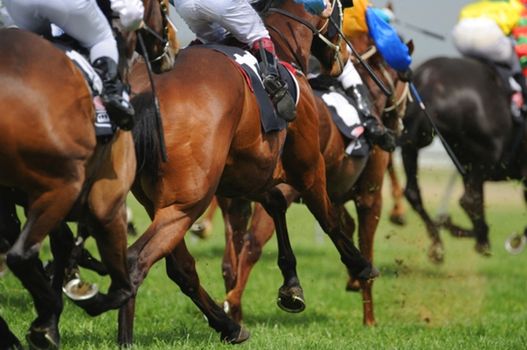
Are you new to horse racing?
If you answered yes, then you’ve come to the right place.

With a whole bunch of Irish meetings just around the corner, we’ve decided to give you our beginners guide to racing.
So without further ado.
Basic info
There’s no dress code in Irish racing
So you can go as dressed-up or down as you like… of course, there is a prize for ‘most fashionable man’ at the Galway Races.
So you might want to get that suit dry-cleaned, just in case.

Be weather ready
Well, you do live in Ireland…

Pick up the daily paper
T’will have some insight and the race card for the meeting you are going to.

Racing seasons
You should probably know what type of racing you’re going to see, right?
Flat Racing
These races are run over distances ranging from 5 furlongs (5/8 mile or 1000 metres) to 20 furlongs (2 1/2 miles or 4000 metres) and are started from stalls.
There are no obstacles and the flat racing season runs from mid-March to mid-December. Flat horses mature quickly and start running as 2 or 3-year-olds.
National Hunt or ‘Jump’ Racing
All jump races are contested over at least 2 miles and the horses have to jump a number of obstacles.

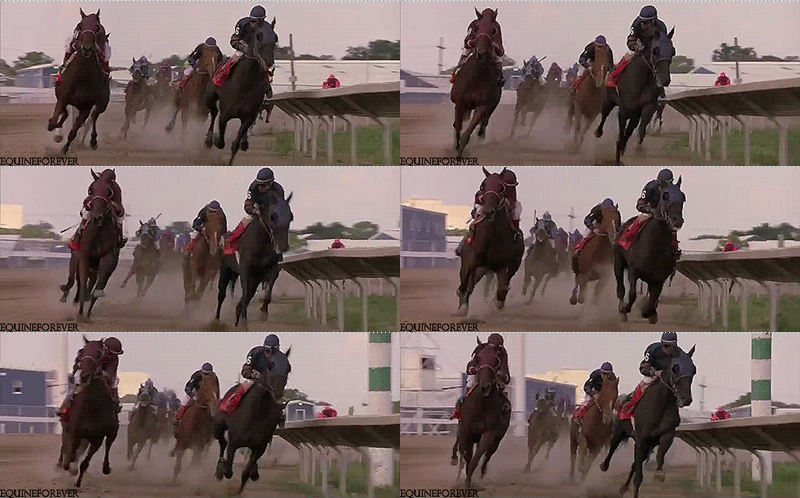
Luckily the acrobatic Jockey walked away from his somersault fall without a scratch.
Jump horses mature more slowly and don’t run until they are 4 or 5-year-olds. Jump racing goes on all year round but its main season runs from November until the end of April.
Race types
Maiden
This is for horses that have yet to win a race.
Handicap
In this race, all horses carry weights based on their ability. The horse which is the highest rated carries the most rate and the one with lowest carries the least. This is suppose to even the field for all horses.

Novice
This is a hurdle, or steeplechase for horses that haven’t won such a race prior to that season.
Bumper
This is a special race for the younger jump horses and is usually ran between 2 and 2 1/2 miles.
Group 1, 2, 3
These are the valuable races, with Group 1 being the most valuable. The weights carried are the same for all horses in these races.

Basic terminology
This little dictionary will help you understand what the people at the races are actually talking about.
Amateur: These jockeys mostly ride in bumper races. Their name is always prefixed by Mr, Ms or Mrs. They can claim a weight allowance of up to 7lbs depending on the number of winners they have ridden.
Apprentice: Young professional jockeys who can also claim a weight allowance of up to 10lbs, dependent on the same parameters as above.
Blinkers: A piece of equipment that goes over the horse’s head to restrict it’s vision and help it concentrate in a race.
Cheek Pieces: Sheepskin bands on each side of the bridle which help keep the horse focused.
Draw: Flat races are started from stalls and the draw number designates which stall each horse starts from. At some tracks certain positions are advantageous.
Furlong: 1/8 of a mile. Equal to 220 yards or 200 metres.

Judge: The official who declares the winner and placed horses in a race and the winning distance.
A Length: The approximate length of a horse: about 8 feet. Winning margins are measured in lengths.
Mare Female horse aged 5 years or over.
Noseband: A sheepskin band around the horse’s nose to help it concentrate.
Off the bridle: A horse being pushed along by its jockey to keep up with the pace.
So there you have it, a brief guide for your day out at the races. Now go get a winner, but most importantly, have the craic! Click here to find out more.

LISTEN: You Must Be Jokin’ podcast – listen to the latest episode now!