By Shane Breslin
The party is upon us, and we’re not on the guest list.
Or, more accurately, we’ve again mislaid our invitation.
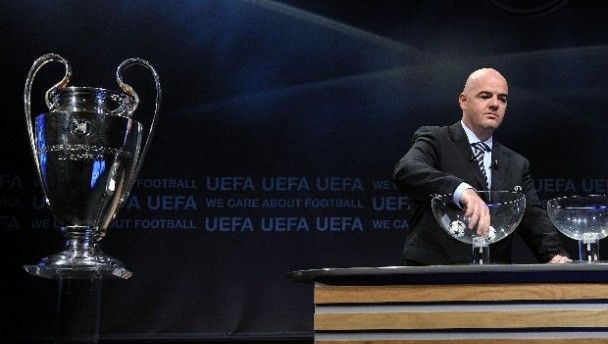
The draw for the 2010/11 editions of the Champions League and its ugly sister, the Europa League (who could well turn out to be a classy chick once the acne clears up), took place in Monaco last Friday, without the name of any of our clubs on those little strips of paper plucked from clear perspex containers by legends of the past and present, and Gary Lineker.
Qualification for the Champions League is something like the Ark of the Covenant for Irish clubs, or at least the Ark conveyed in Spielberg’s Raiders, its destructive power unleashed just as you come close to capturing the prize. Over the past six summers, Shelbourne, Bohemians and Drogheda United have all gazed longingly at its wares only to be sent spinning to oblivion and beyond.
In one way, there is a sense that the golden era of recent League of Ireland vintage occurred in about 2004, when Shelbourne overcame Hajduk Split on a memorable evening at Tolka Park before welcoming Deportivo La Coruna, then one of the leading sides in La Liga, to Dublin for a final qualifying round extravaganza. The dream, nourished by a 0-0 at Lansdowne Road, eventually died in Galicia.
Six years on, a place on the stage alongside Europe’s elite remains the impossible dream for Irish sides, the boom and bust manner in which the game has been characterized here working against sustained progress. Drogheda United came within a lick of paint of knocking Dynamo Kiev out two years ago, but the club was already struggling for cash-flow at the time and almost folded four months later. A little over 13 months ago, I sat among a tense crowd at Dalymount Park, hoping against hope that Bohemians could hold out for the 0-0 draw with Red Bull Salzburg which would have guaranteed the Irish champions at least four more European games, and a shot at qualification for both the Champions and Europa League group stages.
Sadly, and all too predictably, a defensive cock-up four minutes from the end gifted the winning goal to a Salzburg side which had plain run out of ideas. The Austrians eventually qualified for the Europa League – the prize for losing 5-1 on aggregate to Israel’s Maccabi Haifa in the final qualifying round of the Champions League – and promptly won all six group matches, including home and away triumphs over Villarreal and Lazio.
New regulations
It would be folly to suggest that Bohs could have emulated Salzburg but for the frailty of their right back Mark Rossiter on that fateful July evening. The spring-autumn rhythm of the League of Ireland, introduced to a mixed reaction in 2002, leaves Irish sides holding a distinct advantage in the early rounds of European club competitions, an advantage that would be nullified, or even tipped in the opposite direction, during a winter European programme. Yet the whole episode served as a reminder of how tantalizingly within reach the carrot of participation in the group stages of the Champions or, more likely, Europa League really is.
With new regulations introduced by Uefa over the past two years, that place in the group stages is more tangible than ever.
Firstly, the delineation of champions and non-champions paths to the Champions League (a misnomer in itself) means that the situation which left Shelbourne facing a virtually impossible task against Depor six years ago could not transpire now. Should any Irish side progress in the Champions League preliminaries, they would avoid the lurking sharks of Europe’s most powerful leagues, who must face off against each other on the other side of the draw. Thus, this year’s Champions League qualifiers included ties such as Ajax-Dynamo Kiev and Werder Bremen-Sampdoria, while the champions of the lower-ranked leagues battled it out for five guaranteed places at the top table, the upshot being that a team such as MSK Zilina of Slovakia can look forward to a debut which would surely have been beyond them in the past. Zilina emulated APOEL Nicosia of Cyprus last year, who also joined the competition at the same stage as Bohemians and won through to the competition for the first time, earning a fat €10m slice of the Champions League pie by season end.
Secondly, the mechanism which links the Champions and Europa Leagues – Champions League third qualifying round losers go into the Europa League play-offs; the vanquished Champions League play-off round sides are parachuted into the Europa group stage – ensures that second chances await should you safely negotiate your first tie. For various reasons – the luck of the draw, perhaps, against Salzburg; unforgivable complacency against Welsh minnows TNS this summer – Bohemians have failed to survive that opening test on each occasion, and the profit-and-loss accounts are expected to show that such failures have dealt a telling blow to the club’s aspirations of exercising a dominant influence on the Irish football scene for years to come.
Bohs’ missteps aside, the bottom line of the two subtle but far-reaching alterations to Uefa’s club competitions is that more and more clubs are getting the chance of group stage football, and the financial benefits that go with it.
In 2007/8, just 15 countries were represented in the Champions League and 21 in the Uefa Cup, later binned and rebranded as the Europa. In the competitions which start in a fortnight’s time, club sides from 18 different nations will be represented in the main event and 24 in the Europa League (making it clubs from 28 countries in either of the two competitions, an increase of 16 per cent on three years ago).
While the financial rewards for the Europa pale in comparison to the Champions, it would still be significant in an Irish context, with a guarantee of around €1.2m just for getting there, even without taking into account the gate receipts and extra merchandising opportunities presented by a European campaign.
Europe – a matter of time?
Surely it’s just a matter of time, and hard work and strong will and a sprinkling of luck, before an Irish side bridges the gap. It is no idle claim. Hajduk Split and BATE Borisov, who take their places in the Europa League group stages this month, have been knocked out of Europe by Irish sides since 2003. Two leagues ranked lower than the League of Ireland, Hungary and Moldova, are also represented in this season’s Europa League (although that situation, combined with Irish sides’ largely disappointing results this year, is certain to mean the League of Ireland will drop further down the Uefa co-efficient list in the future).
If the carrot is to be grasped, who’s going to make the leap? Shamrock Rovers would appear to stand the best chance. The Hoops, five points clear at the top of the table with nine games remaining, boast approximately 3000 season ticket holders, almost double the average attendance of their nearest rivals in the League, and the attractiveness of the club to its fans and potential patrons would only increase with regular European football in the coming years.
In that regard, the decision to rebuff a potential bumper pay-day when Juventus were the visitors for a Europa League fixture a month ago showed a long-term vision that has been lacking at some Irish clubs in the past. Rovers chiefs took the view that a limited attendance at Tallaght Stadium, and the corresponding reduced windfall, was eminently more favourable than a bigger crowd at another venue – Aviva Stadium, say, or the RDS – in that it would both showcase Tallaght and become part of a legacy on which the club could build a new history. How many of the 25,000 in attendance for Shels-Depor in 2004 were at Richmond Park when the league trophy was handed out less than three months later?
Those with long memories could well point out that Rovers could not have found themselves in their current state of rude health without a spell in examinership, when debts reported to be in excess of €2.5m were written off prior to the fan-led takeover in 2005.
But that’s a discussion for another day. On the field, even as costs are cut and it appears that the Holy Grail is as elusive as it has ever been, the breakthrough is getting closer. Gradually, incrementally, one step at a time.
Shane Breslin writes a weekly League of Ireland column for JOE.ie. For more, click here.
Â
LISTEN: You Must Be Jokin’ podcast – listen to the latest episode now!