Ahead of another weekend of Magners League action, JOE picks out three things to look out for in the games involving the Irish provinces.
Three out of four Irish teams in the semi-finals?
Now that the Six Nations is out of the way and the World Cup is quite a long way away yet, the focus turns to club rugby as the latter stages of the Heineken Cup and the Magners League click into gear. A glance at the Magners League table will tell you it’s going pretty swimmingly for the Irish provinces at the moment.
Munster top the pile on 63 points, a healthy nine points ahead of the Ospreys in second with Leinster and Ulster making up the top four tied on 51 points apiece.
Considering that 12 points separate Llanelli Scarlets in sixth from Newport-Gwent Dragons in seventh and there are only five games remaining in the competition, the semi-final line-up will, barring a miracle, consist of four of the teams currently occupying the top six places in the table.
From this weekend on, there is only one weekend that is free of Magners League action, the second weekend in April when all three provinces will be in European competition, so it promises to be an interesting race from here until May 6 when the final four will be decided.
Despite a difficult schedule which includes four games against teams in the top six, Munster’s current lead should be enough to see them through to the last four, while given Leinster’s status as the pre-eminent team in Europe this season, if they can continue the form shown thus far in this campaign, they too will fancy their chances of appearing in the final for the second season in succession.
Ulster’s meeting with the Scarlets and the Dragons will be crucial to deciding whether or not they can make the semi-finals, although the fact that both of those teams, and the Ospreys, are not involved in European competition may give them a distinct advantage.
It should be noted as well that Connacht, with three wins in their last four games in the Magners League, have crept up to 8th in the table relatively unnoticed. Eric Elwood’s side are level on points with the Dragons in seventh and five points clear of Benetton Treviso in ninth and are well on course to finish outside the bottom two for the first time since 2005, significant progress for a side definitely on the way up.
Munster scrum half Conor Murray
Following Munster’s Heineken Cup exit at the hands of Toulon, many pundits predicted that it was the beginning of the end for the famed province such was the paucity of talent coming from their production line compared to what seemed like a constant conveyor belt of talent coming out of the academies in Ulster and in particular, Leinster.
The criticism of Munster’s academy did seem harsh and was staunchly defended by Mick Galwey in a recent JOE interview, but whatever can be said about the province, they certainly know a thing or two about scrum-halves.

Conor Murray is a highly-regarded prospect at Munster
Two of the three scrum halves battling for the Irish number nine jersey, Peter Stinger and Tomás O’Leary, are engaged in a battle that is almost as competitive as at international level to be Munster’s first choice scrum half, while the third, Eoin Reddan, also passed through Munster twice in his career, but had to go elsewhere before his talents were recognised.
The latest incumbent in the number nine jersey, 21-year old Conor Murray, is highly regarded down south and is thought to have a big future ahead of him. Certainly, Tony McGahan must think so to start him amongst a team full of internationals when Munster take on the Cardiff Blues on Friday night.
Murray proved to be up to the task against the Dragons earlier this month and the Cardiff game gives him yet another chance to show that he is either a diamond in the rough in Munster, or that the talk of the lack of young talent in the province was only talk after all.
Refereeing consistency
Up until Ireland’s magnificent dethroning of England as potential Grand Slam winners at the weekend, much of the talk about Ireland’s Six Nations campaign revolved around issues such as indiscipline and Ireland’s escalating penalty count.
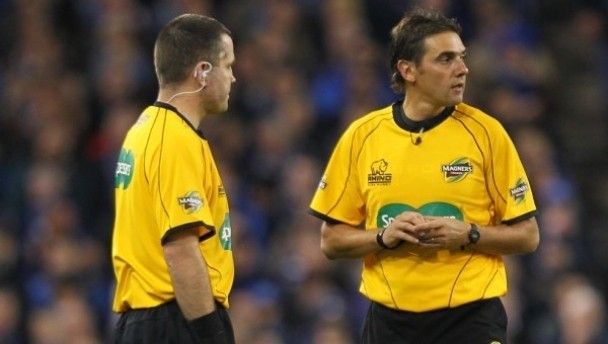
It seemed to me though, that referees in the competition, whether it was part of a directive or not, were far stricter than in both the Magners League and the Heineken Cup. It certainly would go some way to explain Ireland’s massive penalty count and the bewildered reaction of some players to what looked like pretty harsh calls.
Then, of course, there was the horrendous decision to allow Mike Phillips’ try against Ireland a few weeks back. All of this coming only a year after referees’ chief Paddy O’Brien decided to change the refereeing laws in the middle of the Six Nations with little or no notice, to the general disgust and disillusionment of players and managers alike.
It would be nice if, come the World Cup in the autumn, that refereeing does not prove to be a bone of contention, whether it is in games involving Ireland or not.
With no internationals until August, players will only be subject to officiating at club level, so it is important that the refereeing in the various competitions, including the Magners League, will be on the same wavelength and that officials are not the subject of so much debate again later in the year.
LISTEN: You Must Be Jokin’ podcast – listen to the latest episode now!