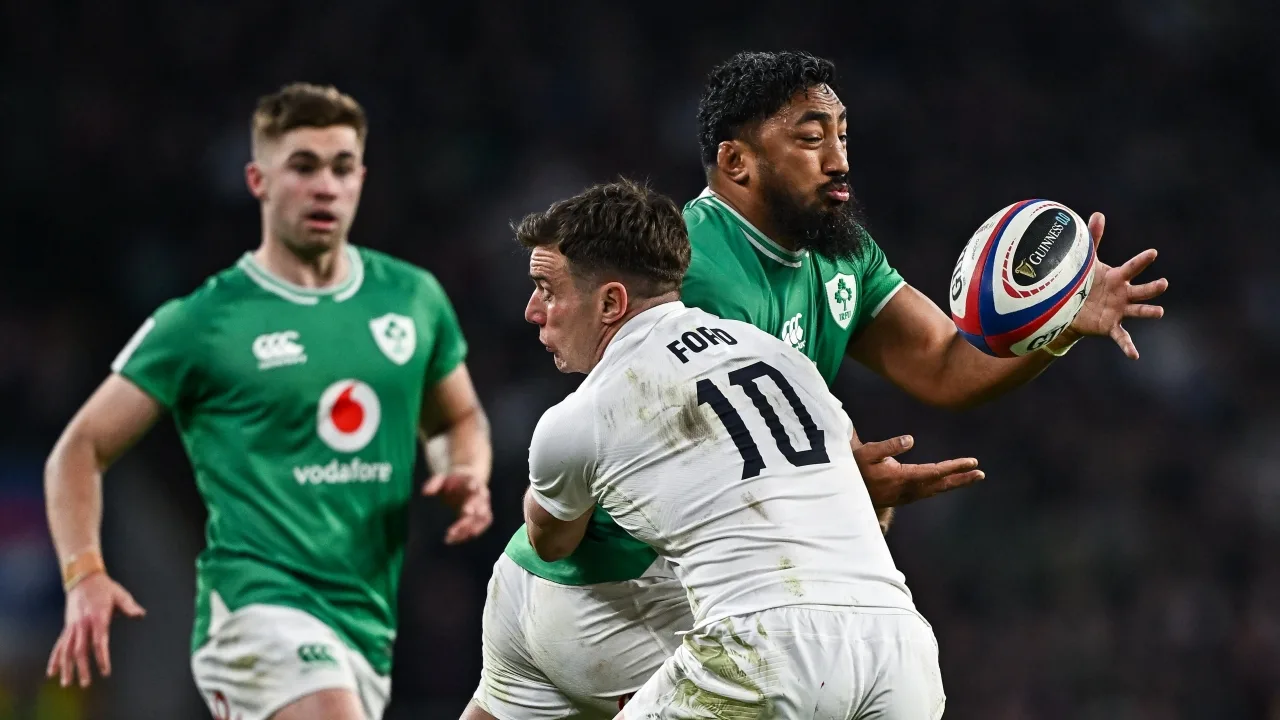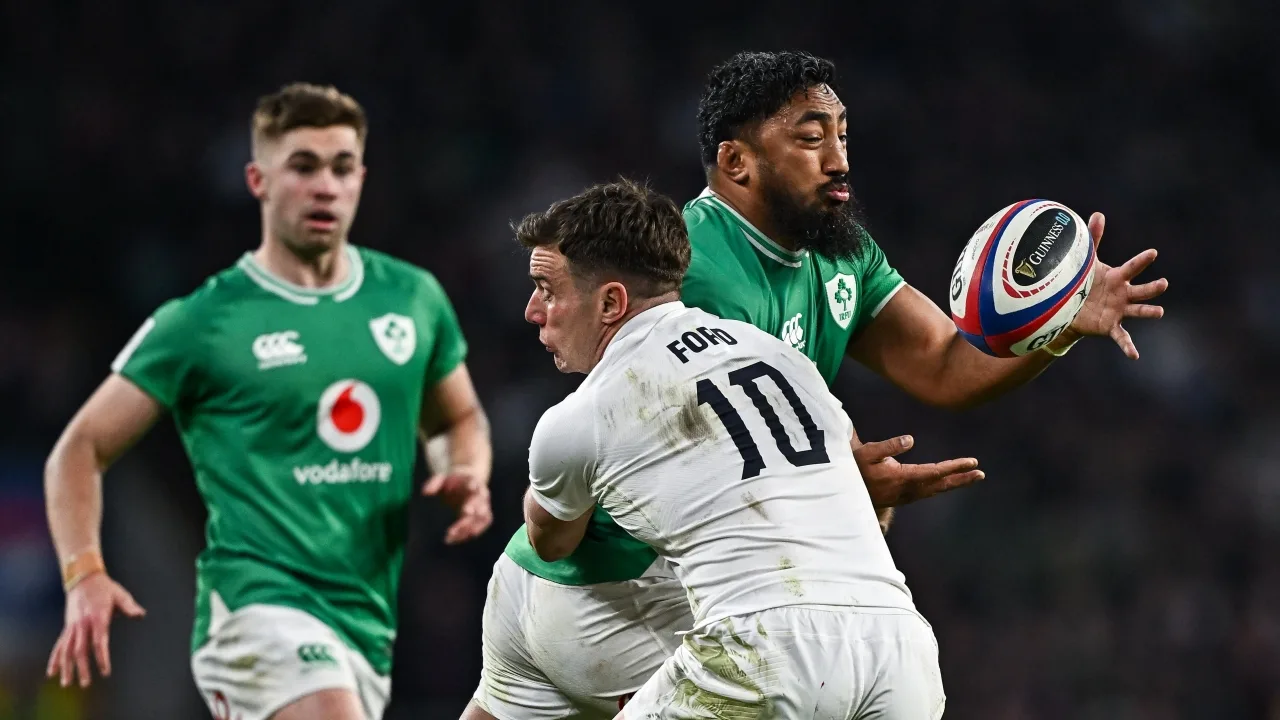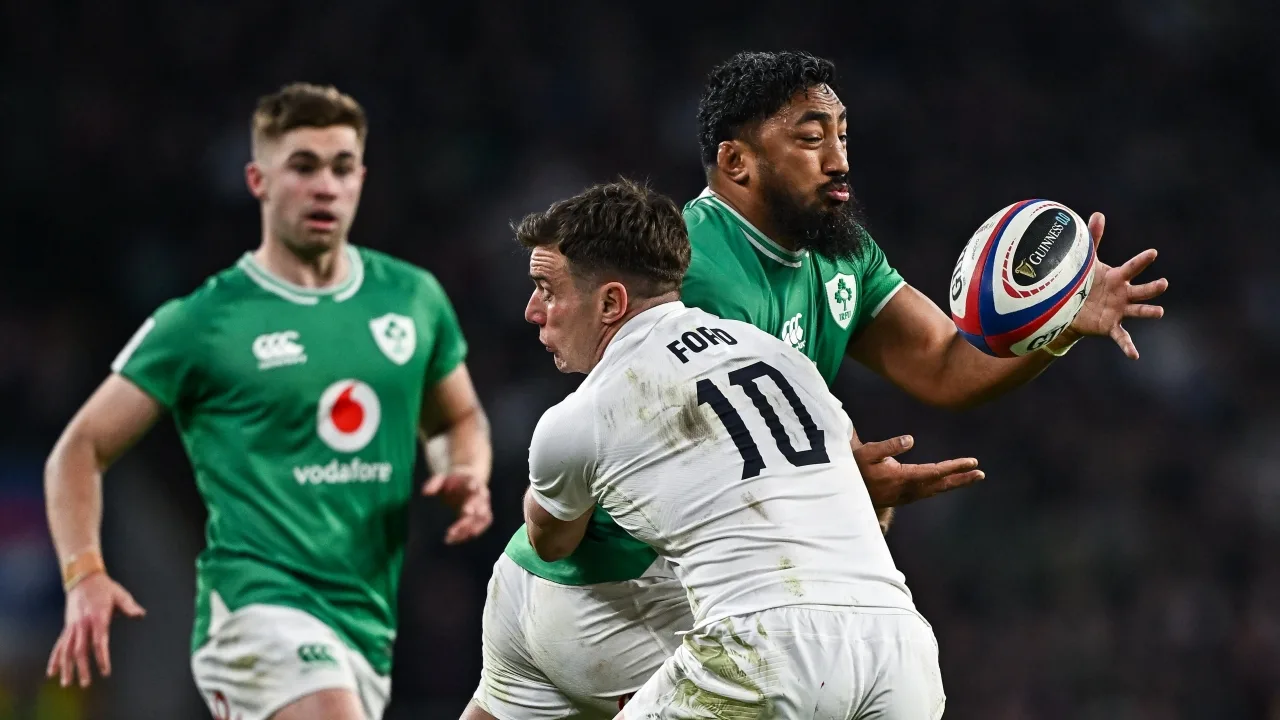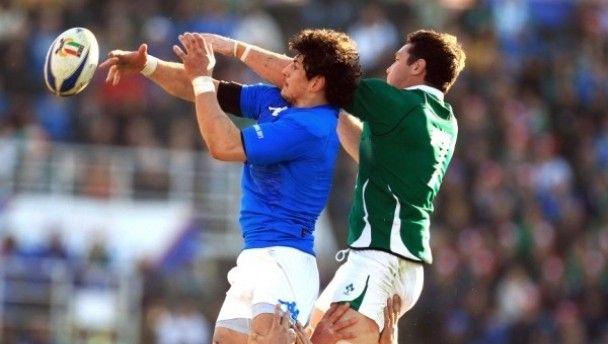

This week, Malcolm reflects on a stuttering Ireland performance against Italy and looks forward to the crucial clash with France this weekend.
The Italy game at the weekend didn’t go entirely according to plan and if you hadn’t seen the game and just looked at the result you would wonder what had gone wrong. Having played so many games against Italy myself, though, I know how physical they are, how resilient they are and how difficult they can be to play against and they certainly proved that on Saturday. It was our first game and it was a banana skin in the waiting: a no win situation, a team written off as a below-par outfit and although we did scrap a win we were guilty as we quite often are of underestimating the physicality of the Italians. This was quite evident in the tackle area where we seemed to cough up and turn over ball, but also we seemed to not fully gauge the intensity of a Six Nations game, there were less holes in the opposition’s defence, less opportunities and hence there was a necessity to be more accurate and more clinical.
Against France, there’s certainly a need for a third lineout option and you have to wonder where that’s going to come from?
I don’t think it was our structure that let us down; it was just a case that on occasion we coughed up the ball when it most mattered. Credit to Italy though, they were very much in the game, there was no lack of fitness or discipline on their part which is often the case with them; if anything they were very disciplined. They certainly didn’t play as they usually would by slowing the ball down and fighting for it on the ground; Ireland had no problem getting continuity. I think Italy defended very well, they fanned out and let Ireland have the ball and said: ‘You’re going to have to score tries to beat us’. Ireland did indeed play some great rugby at times and had they finished off some of the opportunities they created it could have been a different game as Italy might have become dispirited, but as it turned out, Italy led 6-3 at the break and it was game on.
Ireland turned up the heat after the break; a solid set piece giving the backline an opportunity to run a nine play into the Italian midfield, a quick recycle and two phases later, O’Driscoll isolated Castrogiovanni and rounded him, putting Ireland ahead. Ireland really needed to keep that momentum up, but for whatever reason they just couldn’t keep a hold of the ball, coughing it up uncharacteristically. It kept Italy alive and inevitably Italy would get their chance. For a long time, it was a four point game and things got more tense by the minute for Ireland. When Italy got their try, it looked ominous, but credit to Ireland for regrouping and proving their resolve again. There was no panic there, the team has been in that position before, they are resilient and have the necessary experienced campaigners to turn the result back in their favour.
A good show of the depth of the squad was such that although Sexton, need I say our first choice number ten, was off, you knew that we had the right man in Ronan O’Gara to pop a drop goal over. The issue, however, was getting hold of the ball as Italy had shown good patience with the ball, a side to Italy we had not expected to see. A well contested kick off led to a scrum giving us vital possession in the Italian half. It was always then about getting O’Gara within drop goal range, good execution got them there and once again O’Gara was the match winner.
Lack of a clinical edge hurt Ireland
Ireland tried to play rugby and tried to spread it wide from the off and although there might be a case made that Ireland should have played for territory a little more, I don’t think it would have been that simple because the kicker was always faced with three at the back if they were kicking off first or second phase. To be fair, I thought that Jonathan Sexton, and Ronan O’Gara when he came on, made good use of the boot and varied the gameplan well. You can’t really fault Ireland’s structure or decision-making; you only get so many opportunities to score during a game and when you get them you have to take them.
If you compare that with what France did against Scotland, the French actually had limited opportunities but they seized each one, making the Scottish pay for their mistakes. Key players took the game by scruff of the neck, Medard was exquisite and showed some deadly finishing, while their scrum was brutish, bullying the Scottish scrum into giving away a penalty try and laying a marker down to everyone else. With the amount of possession and opportunities Ireland had, they need to be working the scoreboard, they need to be clinical and it just didn’t happen on the day but Italy certainly have to be given some credit, they didn’t give away any soft scores.

Brian O’Driscoll and Gordon D’Arcy didn’t enjoy their finest hours in an Ireland jersey against Italy
When you look at the amount of unforced errors Ireland made, it was surprising that a lot of them were made by Gordon D’Arcy and Brian O’Driscoll, who are both very experienced players and held in very high regard around the world. They set themselves very high standards and they certainly weren’t met on Saturday. Darce dropped a few balls and O’Driscoll was let down by his left-to-right passing on a couple of occasions, but in fairness, there are no better critics than themselves and they know they’ll need to tighten things up ahead of the France game next weekend. But the way the game was played just shows you how the game has developed over the years. The likes of Italy are letting teams running at them, whereas previously they would have tried to spoil the play and when you did get a hold of the ball you had a chance to do damage. Now they’re content to let a team like Ireland run at them and they are confident in their ability to defend against it. I think Ireland needed to hold on to possession a bit more and if they were a bit greedier with the ball, they might well have got a few scores.
Scrum deserves credit
I think that the scrum should be given some credit for their performance, especially for the way they held out the Italians on their own line at the scrum. Mike Ross and Cian Healy did brilliantly, especially when you compare it to the way that the Scottish scrum crumbled against France, certainly in the early stages. This was despite the fact that the referee, Roman Poite, seemed to have a bee in his bonnet against Ireland which I thought was unfair, but you can’t help that. It certainly wasn’t a case of the Italian scrum being stronger than the Irish one, which had been a concern beforehand.
The lineout, however, definitely was a cause of concern. I was listening to the RTE panel after the game talking about the need for a third lineout option and it’s certainly a valid point, as when you look ahead to the France game, France will have Dusautoir at the back, as well as Harinordoquy, Bonnaire and Nallet competing and if you only have Paul O’Connell and either Donncha O’Callaghan or Leo Cullen competing against that we could be in trouble. There’s certainly a need for a third lineout option and you have to wonder where that’s going to come from?
David Wallace went up for one lineout during the Italy game that was laboured enough and there could be a case made for getting the likes of a Kevin McLaughlin in there to help out. Of course, it depends on whether Jamie Heaslip is going to be fit for next week and if he is he’ll be badly needed as a lineout option in both attack and defence. In the Italy game, the Italians got all of their lineouts without the defence getting off the ground, while there was constant pressure on Ireland’s throw throughout. The lineout is something that will have to be addressed ahead of the France game, because from personal experience, France have always targeted us there, getting good return.
Malcolm on England, next weekend’s game and a huge boost for Leinster
France as strong as ever
From what I saw of France, they looked as strong as they ever were; they were dangerous whenever they had the ball, they counter-attacked well, they were always looking to offload, played a lovely style of rugby and obviously have plenty of strong players throughout their side. Saying that, Scotland scored three tries and although they were always more than a score behind, they looked quite good as well. I don’t know if that was France allowing them to play or not, but if France allow us to play the way they allowed Scotland to play I think we can cause them plenty of problems.
Playing against France is all about not making mistakes; they are deadly on loose turnover ball.
As far as the weekend’s other game is concerned, I wasn’t overly impressed with England against Wales. They were solid, but I didn’t think their scrum was brilliant which I was a little surprised by in that it wasn’t as solid as I thought it would be. I was, however, impressed with their lineout and I thought that Tom Palmer in the second row was excellent. The back row worked hard as well, but overall they were pretty good without anyone apart from Toby Flood really standing out. I think that they will come up against stronger teams than Wales, but they got a good away win and they now have three home games on the bounce. If Ireland were to beat France, I couldn’t see them losing twice so that could be a difficult one for England. Over the whole weekend, I thought France were the most impressive of all the teams on show.
Looking ahead to Ireland’s clash with France this weekend, whether changes will be made or not to the Irish team depends on who’s fit. In terms of the back three, even though we didn’t get much of chance to see what they could do against Italy, the likes of Andrew Trimble or Tommy Bowe could come in if they’re fit, while in the back row the same can be said of Stephen Ferris and Jamie Heaslip, who are very good lineout operators.

Ireland will have to be careful against France with the likes of Aurelien Rougerie around
Playing against France is all about not making mistakes; they are deadly on loose turnover ball. They are real opportunists and jump on every chance they’re given. We need to be able to express ourselves and play without inhibition, but at the same time without playing frantically and pushing passes that aren’t on, turning over ball. We need to secure lineout and scrum ball and put France through phases, releasing our strike runners and then pinning corners, playing some pressure rugby to force France into mistakes. Sergio Parisse nearly got an intercept try against us on Saturday, which came from two laboured flat passes. It was a timely and thankfully not a costly lesson of the accuracy required and the quality of player that can read your play. The French will prey on this type of play, the likes of Rougerie will be under the posts and France will be 7-0 and you’ll be chasing shadows.
Developing our own talent and culture (at Leinster) has been so important and keeping our senior, most experienced players is vital to this as they pass on the knowledge.
It’s going to be a difficult game this weekend, but hopefully playing at home in front of a big crowd will give us a big advantage and will intimidate the French slightly, you’d also have to hope that France won’t travel well, but the main thing to focus on is keeping the scoreline tight, being patient and not making any simple mistakes. France will allow us to play, but the last thing we want to do is give away an intercept try or drop the ball and see France kicking it through and getting a try out of situation like that; we want to make them work for whatever tries, if any, they do score against us.
Massive boost for Leinster and Ireland
Finally, Brian O’Driscoll, Jamie Heaslip and Jonathan Sexton all signed contracts with the IRFU last week and it was good to have their situation sorted out because it’s been playing on the mind of the players somewhat, so it’s good that it’s all settled. The likes of Fergus McFadden and Seanie O’Brien have signed on as well and it’s been great over the years that Leinster have been able to hold on to their key players, that’s the way you want it.
You don’t want to create a culture where you’re building up players and them selling them off to perceived richer clubs because that kind of thing can spiral out of control. It would be one thing if you were making a good few bob out of the likes of Luke Fitzgerald or Jamie Heaslip, but when it’s a matter of an extra €30,000 or €50,000 between them staying or going, that’s a different issue altogether. It’s great news that they’ve signed on and hopefully we can continue to bring on more and more players in the future. Developing our own talent and culture has been so important and keeping our senior most experienced players is vital to this as they pass on the knowledge. It is this culture and ethic that has been built up in Leinster in the last few years that has been key to the success of the squad and I’m very proud to have been a part of it and to have seen the Leinster brand grow with it.
LISTEN: You Must Be Jokin’ podcast – listen to the latest episode now!