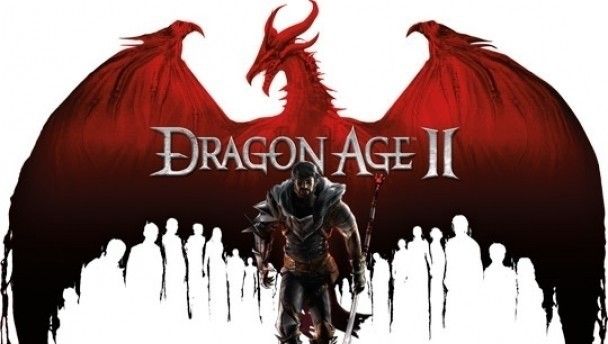
Dragon Age II has received a mixed welcome from gamers since launch, an unusual sight for typically prolific developers Bioware. Here’s what we at JOE thought of the RPG.
By Leo Stiles
Dragon Age 2 isn’t a bad game but coming from a developer with a track record as good as BioWare’s, it is a massive disappointment and pales in comparison to its predecessor and pretty much every other game the company has released in recent years.
What the hell went wrong?
It all comes down to BioWare thinking small instead of telling their stories on a typically epic canvas. Much of this stems from the game being set, for the most part, in the single location of Kirkwall City, and while the location is packed with events and characters, it is just too small a place to host a sequel to the almost-apocalyptic RPG that was Dragon Age: Origins.
The story of Dragon Age II recounts ten years in the life of Hawke, a refugee from the province of Fereldin that was devoured by the Darkspawn army in the first game. As a result, you have to take his (or her) remaining family to the fortress city of Kirkwall.

Hawke doesn’t look too happy either
The city itself is an unsparing place visually and continues the depressing brown trend that had marred too many games of late. This might not have been a problem if there had been plenty of diversity in the missions but the quests and stories offered in the city are pretty uninspiring and follow the usual RPG conventions of debt collecting and item fetching that outstay their welcome, as much as the city does.
Slow starts are often forgivable in RPGs and at first we soldiered on and waited for the world to open up to us in order that we could begin our heroic quest in earnest, but it never happened. What does happen is that you spend numerous hours questing to build up the funds for an adventure expedition which turns out to be an extended dungeon romp, before throwing you right back into the city you thought you had escaped.
A day/night mechanic does give the chance to present Kirkwall in a different light but it’s still the same place, albeit a huge one that you have been stomping around in for 20 hours by the time the half way point comes.
Like many BioWare games, what you get out of the story is dependent on what you put in and as was the case with the first game, there is a wealth of back-story and incidental detail to be savored or ignored in books and documents that are peppered throughout the game.
The main story, however, is muted and anti-climactic and really only serves as a prelude to the eventual Dragon Age III. One feeling we couldn’t escape whist playing through the story of political intrigue and shutting alliances was that the game had more in common with the Awakenings expansion for the first game than a fully-realised sequel and perhaps that’s what it ultimately should have been, with the game ending foreshadowing a huge conflict in the next game in the series.
Combat is one of the key areas where the sequel truly innovated and while some of you might scoff at the game’s appropriation of the Mass Effect combat system, it’s undeniable that the immediacy it affords the player is a major step forward for the series.
Combat overhaul
In Dragon Age: Origins, the combat was a process of selecting your opponent and the watching as your avatar went through the motions of beating down your chosen baddie with just the odd spell or special attack keeping things from being too automated. This was a major gripe of the first game and sometimes the player felt like a spectator rather than feeling like they were in the heart of the fight.
Dragon Age II tweaks this system, and now every button press results in an attack from you, which connect with satisfying rumbles from the control pad. The game retains the same system of mapping special attacks and abilities to the face buttons but now there is more immediacy to it all. Crucially, you can change direction and break off your attack, just as you would in any action game and when combined with the rapid character switching feature, battles turn into hugely entertaining and bloody bursts of violence.
Ah yes, the violence. Every swing of your sword results in an almost comical fountain of blood and while this is amusing at first, it quickly becomes irritating as you watch cut scenes after cut scenes with your characters plastered with blood. War may be bloody hell but this sort of overkill is just silly. 
If all this sounds like the game has been dumbed down, don’t worry because there still the excellent tactics system for the players that prefer to micromanage everything, with just about every action in your party customisable. It’s good to see that BioWare has not sacrificed this depth for the sake of immediacy.
The combat does save the game from itself and the much more streamlined conversation mechanics also take the sting out of what is ultimately the first BioWare game to disappoint.
If the developer had just made the story and locations a good deal more ambitious in scope and execution, we would be talking about another triumph. As it stands the game is merely average and honestly, that just isn’t good enough.

Format: Xbox 360, PS3, PC; Developer: BioWare
LISTEN: You Must Be Jokin’ podcast – listen to the latest episode now!