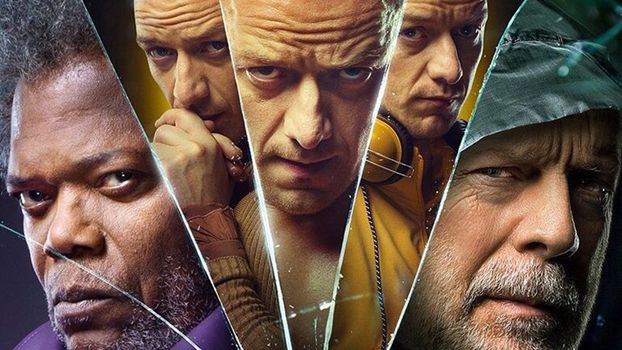
Glass is class.
19 years is a very long time in any (Sixth) sense, but when it comes to cinema, it might as well be an eternity.
After grabbing Hollywood’s attention with The Sixth Sense, M. Night Shyamalan instantly became a household name around the world as the supernatural thriller secured six Oscar nominations (two for him personally),
The director instantly became the hottest name in Hollywood as ‘The Dead People Movie’ – that’s how Samuel L. Jackson lovingly calls it – turned into a cultural phenomenon. Hell, that twist is still a massive moment in the pop-culture zeitgeist.
How would he follow this up though?
In many ways, Unbreakable was a film that before its time as seen by the lukewarm reviews – it currently has a 62% rating on Metacritic (and made barely a third of The Sixth Sense’s box office.) People wanted another supernatural horror. What Shyamalan gave them was a grounded take on the superhero genre that stressed character over action.
Ultimately, Unbreakable has continued to grow in appreciation with every passing year and became a firm favourite with comic book fans.

At the time of its release though, Shyamalan was told that the studio didn’t want to pitch Unbreakable as a comic book film because that genre for those types of films was too niche and that it wouldn’t play well to a wider audience.
Again, 19 years can be a massive time in cinema!
A superhero film that was marketed as a drama. This slight of hand would serve the director well when he returned with Split, a psychological-thriller that (spoiler alert) was actually a semi-sequel to Unbreakable.
After self-financing Split and making that film for just $9m, Shyamalan’s gamble proved to be inspired as James McAvoy’s remarkable performance guided it to $278,454,358 at the box-office.
Fast forward to 2019 and Glass.
We’re living in a cinematic culture where Infinity Stones, flying spaceships, spectacular dogfights, shared cinematic universes, franchise films, stories spread across the galaxy, and events that can turn the world to dust with the snap of two fingers are all the norm, but in this climate, what separates Glass from everything else?
Simple. Storytelling and acting.
Let’s be clear, Shyamalan hasn’t always made great films – After Earth, The Last Airbender, The Happening are all examples of his creative slump – but there’s no denying that he knows how to coax a great performance from an actor.
Toni Collette and Haley Joel Osment in The Sixth Sense. Bruce Willis and Samuel L. Jackson in Unbreakable. Joaquin Phoenix and William Hurt in The Village. James McAvoy in Split, and he continues on with that streak here.
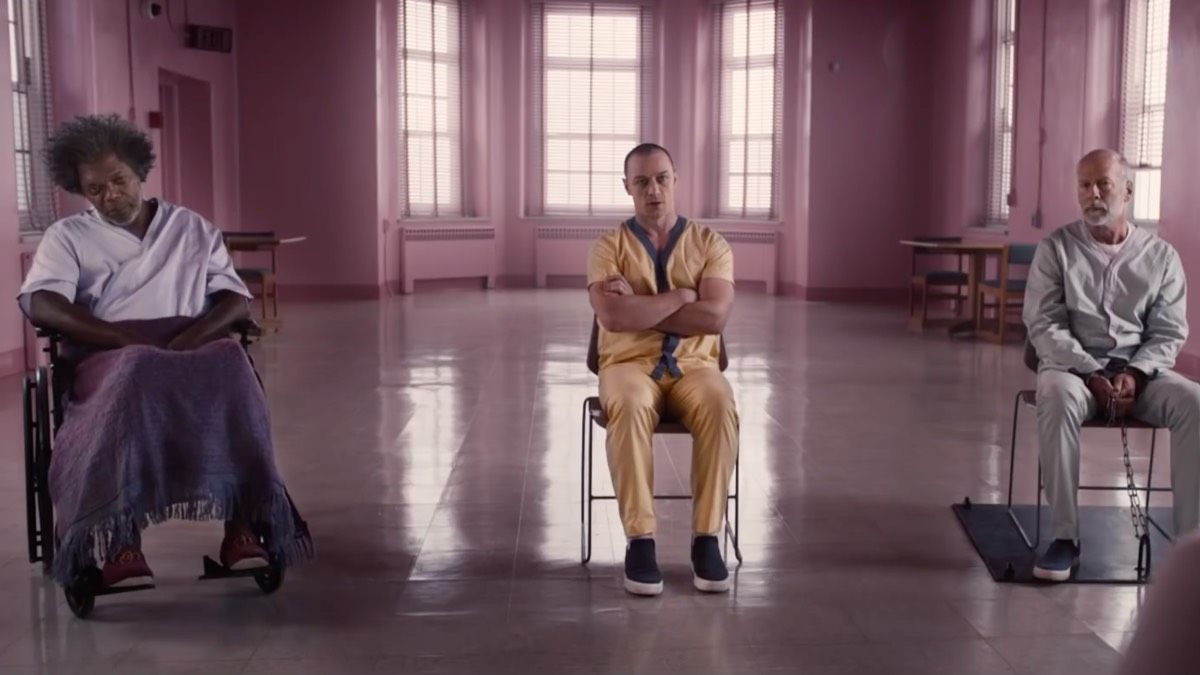
Without getting into spoiler territory, the film sees David Dunn (Bruce Willis), Elijah Price (Samuel L. Jackson) and Kevin Crumb/The Horde (James McAvoy) all locked away as the trend of people thinking that they’re actual superheroes grows.
David has been pursuing Kevin’s superhuman figure of The Beast in a series of escalating encounters, while the shadowy presence of Mr Glass emerges as an orchestrator who holds secrets critical to both men.
Ultimately, all three men end up under the careful watch of Dr Ellie Staple (Sarah Paulson) who has to try and get through to them before the authorities intervene for good and prosecute them for their crimes and vigilante pursuits.
Like Shyamalan’s own career, Bruce Willis has suffered something of a nosedive in recent years – did anyone even watch the likes of Air Strike, Reprisal, Death Wish, First Kill, Acts of Violence, Precious Cargo? – but in Glass, he sticks to what he does best. Stoic, near silent, and authoritative, it’s clear that the director knows Willis’ strengths and limitations as an actor and he plays to them.

Elsewhere, Samuel L. Jackson approaches Elijah liked a snake that’s backed into a corner. Dangerous, methodical, and always plotting his next deadly strike, Mr Glass is always the smartest man in the room but it’s McAvoy’s turn as The Horde that will demand your hard-earned cash.
If you loved what he did in Split, you’ll be a big fan of Glass because we get to see even more of his alter egos including a pair of Irish twins.
In fact, during one particular scene when Dr Ellie Staple is trying to get Kevin to ‘come into the light’, this reviewer lost count of the amount of roles McAvoy was playing. As effortless as turning on a switch, the Scottish actor transitions from one alter ego to another.
Magnetic and terrifying in equal measure, McAvoy also infuses some of his more horrific personas with a level of warmth and humanity that was unexpected.
This being said, ultimately, Glass is very much M. Night Shaymalan’s film and it serves as a meta breakdown of the superhero genre, a love letter to those that adored Unbreakable and Split, and a thoroughly enjoyable concluding chapter.
Of course, those that are familiar with Split and Unbreakable will probably enjoy it more than those that come into this final chapter without any prior knowledge, but it does standalone as its own tale.
 However, it’s not without its faults.
The film does take a while to get the main players together and there’s a plot hole about one of the characters leaving their room that wasn’t fully explained, but 20 years since the director shocked the world with that ending to The Sixth Sense, he has shown again that that he’s still capable of drawing the audience in and shattering their expectations.
We’ll raise a glass to that.
LISTEN: You Must Be Jokin’ podcast – listen to the latest episode now!