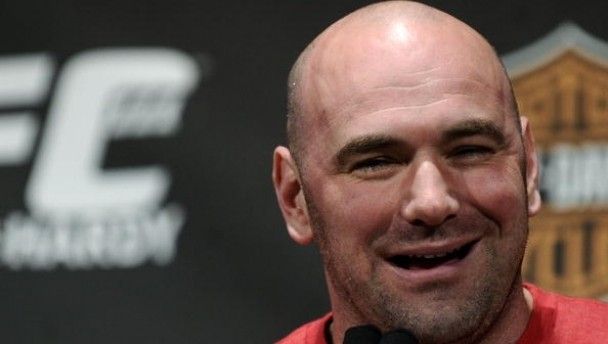
Is Dana White the main reason behind the success of the world’s fastest growing sport, or a danger to its long-term survival?
By Stephen Barry
In 1992, Dana White was teaching boxercise classes in Las Vegas to earn a living. Having dropped out of college in Boston, White had few qualifications that would have tipped him for the success he would achieve in later life.
Eighteen years on, White is at the helm of the fastest rising sport in the world and has been awarded “Promoter of the Year (2005-2009)†by Wrestling Observer Newsletter and received recognition as the†Nevada Sportsman of the year†in 2009.
White is undoubtedly a key figure in the resurrection of MMA although a thorn in his side has always been relations with fighters. As in any organisation, employees will have complaints of unfair treatment and bad pay and the UFC is no different. The UFC’s president’s allegiances are to the UFC’s owners – the Zuffa Corporation. His job is to make a profit and any other motive is secondary. To do this, he needs to keep his costs low and sell his product for as much as possible.
Fighters who interfere with this are effectively playing with their job security. A select few, such as Randy Couture or Tito Ortiz, have the power to oppose White and still remain in the UFC. The UFC roster contains most of the world’s MMA stars and appears on the surface to be the organisation every fighter wants to be a part of. However, some fighters have decided to leave and compete in rival organisations.
Dan Henderson was unable to reach terms with White when renegotiating his contract in December 2009 and decided to join Strikeforce’s roster. After a public spat between the two, Henderson said, “I think I valued myself a little bit higher than they do.” He continued to explain that “their clauses in the UFC fighter contracts are not very fighter-friendlyâ€.
Losing a legend like Henderson to a rival promotion was both bad for business and mismanagement on White’s part. It is not the first time that money issues have driven fighters away, with Roger Huerta giving a candid interview in FIGHT magazine in July 2008 complaining about fighter purses and treatment which ultimately led him to join Bellator in March 2010.
A virtual plethora of fighters have made their feelings known to the UFC. Ortiz, Couture and BJ Penn are just some of the stars that have left (and come back). Frank Shamrock went as far as to say that he would never compete in the UFC as long as White was president – a promise he has kept.
Randy Couture assessed his own situation following an argument with Zuffa over his image rights that led to his resignation. “From that point on [since the argument], I felt like I’ve been swimming against the current,” he said. “I’ve been counted out on several occasions. This has never been about money. It has been about a prevailing feeling of respect. For eleven years of my life I’ve represented this sport with integrity and I never felt like that was appreciated.”
White’s management of fighters has certainly led to some untimely exits from the UFC. It has also persuaded fighters such as Fedor Emelianenko to remain in rival organisations. Some fighters such as Frank Shamrock suggest a fighters’ union may help to address some of the unbalances created by the UFC’s relative monopoly and gain some balance and security.
Despite these blemishes on White’s legacy, he is without a doubt MMA’s saviour. Without his vision the sport may have died a natural death. Any criticism levelled at White must be anchored against what he has achieved for the sport and when all is said and done, fans, fighters and people who make their living from the sport must be thankful to him for all he has achieved.
Â