Every one of them was a game changer.
The Rome Film festival celebrated its 10th anniversary this year and thanks to our friends at Mazda Ireland, we were there to witness some of the best films from around the world.

With over 100 movies on the billing from directors like Wes Anderson, The Coen Brothers, P.T Anderson and our own Lenny Abrahamson, there was something here for film fans of all genres.
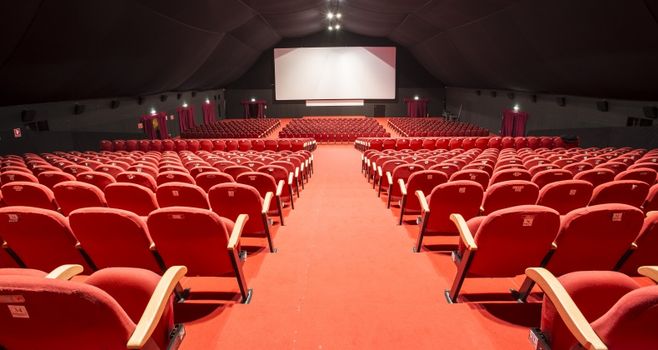
The place to be was the state of the art Mazda Cinema Hall and there even was a few screenings in one of the most innovative and unconventional cinemas around, the Mazda MX-5.

Challenging conventions and a passion for cinema were the recurring themes of another memorable festival and with this in mind, here are 13 films that changed cinema.
The Matrix
Released: June, 1999
What it changed: Special effects. Very few moments in film can leave the audiences collective jaws on the floor but that’s what the Wachowskis did in their stunning actioner.
Comic-books, kung-fu films, dystopian sci-fi, Eastern philosophy, groundbreaking effects and a rage against the machine attitude all perfectly merged in a film that not only revolutionised action films but films themselves. This scene still incites a collective Keanu Reeves-esque ‘Woah! whenever I see it.
https://www.youtube.com/watch?v=3c8Dl2c1whM
Its impact: Any film that has since used super slo-mo for dramatic effect or seriously amped up its kung-fu credentials owes a debt to The Matrix. Inception, Wanted, Watchmen, X-Men : Days of Future Past, Kick-Ass and even Kill Bill spring to mind.
Jaws
Released: June 20th, 1975
What it changed: Summer blockbusters.On a strictly artistic level, Jaws will forever be a timeless masterpiece because it’s a superb film that combines tension, scares and solid acting with some truly memorable set-pieces and dialogue.
We’re going to need a bigger cinema though because Spielberg’s classic was the first US national release that was backed by heavy television advertising, marketing and promotion. It also established the now standardised concept of saturation booking, basically when a film opens at the same time in thousands of cinemas. It created the blockbuster.
Its impact: Every single major film that’s released in summer owes it’s marketing, planning and advertising strategy to Jaws.
Kill Bill
Released: October, 2003
What it changed: Splitting films into two parts. Artistic merit from the director’s view or just a greedy and cynical exploitation to maximise box-office returns? Quentin Tarantino has always blazed his own trail in Hollywood but his decision to split this roaring rampage of revenge has arguably been the biggest trend that we’ve seen in recent cinema.
The two volumes of Kill Bill made artistic sense, visually they’re polar opposites while the tone is drastically different, but the decisions to split other films in two hasn’t always been 100% justified in my view.
Its impact: The Hunger Games : Mockingjay, Che, Harry Potter and the Deathly Hallows, Twilight: Breaking Dawn, The Avengers: Infinity War, Justice League.
Sky Captain and the World of Tomorrow
Released: September, 2004
What it changed: Green screen. This film’s probably the weakest/most forgettable on the list but its influence is arguably the greatest, especially when measured against the current trends in blockbuster cinema.
Practical sets and effects will always be my preference but CGI has been making leaps and bounds in recent years and it’s far more cost effective which is a notable benefit for studios that are looking to keep production costs at a minimum.
Its impact: 300, Sin City, The Spirit, Avatar, Tron: Legacy
Spiderman
Released: May 2002
What it changed: Casting the leading man. Like all film fans, I’ve got a huge amount of love for those mindless action films of the ’80s and early ’90s. The leading man was usually holding some gigantic weaponry and had even bigger muscles but character development wasn’t really important.
Arnie’s films like Predator, The Running Man and Commando are all nostalgic gold but lets face facts, The Governator was never overly reliant or concerned about his performance.
Spiderman and Bryan Singer’s X-Men set an interesting precedent though because action films were now carefully choosing their leading men and supporting cast. Brains, depth and talent on-screen took as much importance as set-pieces and spectacle.
Tobey Maguire was more well known for dramatic roles in indie films but Spiderman’s success meant Hollywood would now start thinking outside of the box.
Its impact: The Dark Knight trilogy, X-Men series, every Marvel film.
Annie Hall
Released: April 1977
What it changed: The fourth wall. To quote The Simpsons “I like Woody Allen films except for that nervous fella who’s always in them”, still though, there’s no denying the fact that his his seminal rom-com is still influencing filmmakers everywhere.
This technique of directly talking to the audience, as if they’re a character or a willing participant in the film, has been often copied but rarely topped.
Its impact: High Fidelity, Fight Club, Wayne’s World, Kiss Kiss Bang Bang, Spaceballs
Toy Story
Released: March 1996
What it changed: 3-D Animation. Who Framed Roger Rabbit? may have highlighted the incredible potential and scope that animated films could venture into but it was Pixar that took the first steps.
There will always be a place for 2-D classics but very few studios have changed cinema in the way that these geniuses have. Pixar has become synonymous with an incredibly high standard of quality and their incredible retrospective at the Rome Film Festival was one of the hottest tickets in town.
Its impact: Ask yourself this question. How many hand-drawn animated films have you seen since the adventures of Woody and Buzz?
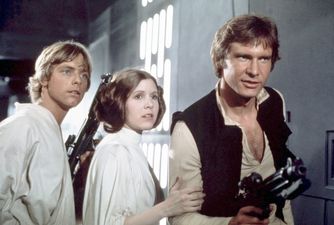
Star Wars
Released: May 1977
What it changed: Merchandising. To be honest, there are so many game changing categories that I could put Star Wars – Episode IV : A New Hope into because it’s a stunning film that reinvigorated cinema.
The effects were revolutionary, the storytelling managed to combine a classic narrative with an entirely new and bold cinematic universe but its biggest influence was arguably the fact that it inspired future filmmakers to pick up a camera.
Lucas film was sold to Disney for just over $4billion a few years ago and while The Force Awakens will absolutely dominate the box-office, I’d argue that this figure will be dwarfed by the amount of Star Wars toys and merchandise sold around the world. It’s a Death Star sized behemoth that will not slow down.
Its impact: Any film that ever had a happy meal toy or action figure.
The Blair Witch Project
Released: July 1999
What it changed: Found footage and marketing. Love it or hate it but I’m confident in saying that a lot of you have seen this film. The distinction between what’s real and what’s fiction became blurred but a large part of its success was that Daniel Myrick and Eduardo Sánchez’s feature was one of the first films to harness the power of the Internet.
$140 million US gross from a $35,000 initial budget meant that a new visual aesthetic was en vogue and horror hasn’t really moved on in 16 years since.
https://www.youtube.com/watch?v=D51QgOHrCj0
Its impact: Cloverfield, Paranormal Activity, REC, Project X, VHS, Chronicle.
The Evil Dead
Released: October 1981
What it changed: I’m a huge fan of horror films because they’re traditionally a genre where most directors learn their skills behind the camera.
George Romero blazed the trail in 1968 with Night of the Living Dead but Raimi’s hilarious and blood soaked epic managed to crank the chainsaw levels up a notch.
The Evil Dead made the famous ‘video nasties’ list because people at the time never really understood its OTT and spoof tone. Raimi managed to turn B-plus horror into an art form and gore-fest’s have seldom been this funny, creative or inspirational.
Its impact: The careers of Peter Jackson, Edgar Wright and every other filmmaker that felt the need to explode a head or use a crash-zoom shot in their film.
Avatar
Released: December 2009
What it changed: 3-D. James Cameron really showed what the medium had to offer but it wasn’t easy.
It was 12 years since he directed that boat movie but Cameron wasn’t exactly taking time off. The Terminator and Abyss director was waiting for technology to catch up with his vision for Pandora but once again he pushed the boundaries of cinema. Cameron actually created the technology to realise his vision because Avatar was one of the first films that genuinely defined what it meant to experience a new ‘cinematic event’ in the 21st century.
Its impact: Very few films have matched its 3-D credentials since but it remains the benchmark for every film that requires you to put on the glasses.
The Lord Of The Rings
Released: December 2001
What it changed: Filming schedules. Peter Jackson famously pitched his version of Tolkien’s saga as a two-part film but as soon as he got the green light to make a trilogy, it became three for the price of one.
Franchises were no longer left to chance with release dates scheduled years in advance. Green lighting big projects also makes fiscal sense because it keeps down the costs of filming, rebuilding and relocating is also reduced because the entire production is done in minimal time. Unproven franchises were now approved with less hesitation or financial risk.
Its impact: Any film that ends with the lines ‘To Be Continued…’
Reservoir Dogs
Released: October, 1992
What it changed: Scriptwriting. Tarantino ushered in the era of pop-culture dialogue and non-linear storytelling but his biggest influence was lighting the fuse on burgeoning independent filmmakers around the world.
Films like Clerks, The Usual Suspects, Memento, Lock, Stock and Two Smoking Barrels owe a countless debt to QT.
Its impact: Tarantino is one of the few directors who always leaves their mark on the audience. You can’t watch any of his films without being influenced in some way.
Mazda’s pure passion for cinema and cars is now entering it’s third year at the Rome Film Festival and it shows no signs of slowing down. The Mazda Cinema Hall was an immersive mecca for movie lovers of all genres while their Lounge and Sake Bar only added to a memorable tenth anniversary of the Rome Film Festival.

LISTEN: You Must Be Jokin’ podcast – listen to the latest episode now!