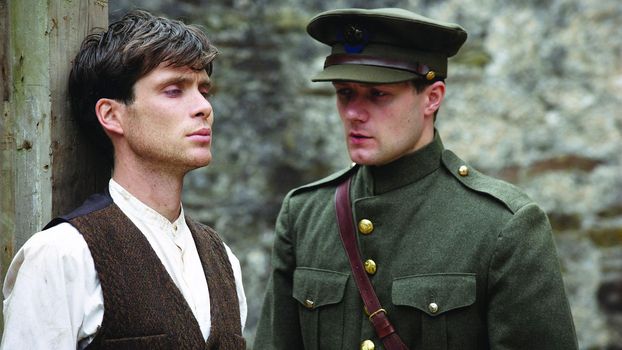
“They were frothing at the mouth.”
For more than five decades, Ken Loach has been one of the most influential, confrontational and essential voices in contemporary cinema.
Having directed the likes of Kes, Sweet Sixteen, Land and Freedom and I, Daniel Blake, the filmmaker has continuously blazed his own path and never succumbed to the siren call of Hollywood.
Then again, why would he want to?
It’s virtually impossible to imagine Loach’s particular brand of British socialist realism translating well to the more saccharine and formulaic Tinseltown mould, but in terms of world cinema, Ken Loach is adored by all.
Case in point, he’s only the ninth filmmaker in history to win the Palme d’Or twice.
It’s noticeable that the two films which saw Loach picking up the prestigious award at Cannes – I, Daniel Blake and The Wind That Shakes the Barley – were both written by screenwriter Paul Laverty and the pair have returned with a new film, Sorry We Missed You.
Ever since they first collaborated together for Carla’s Song in 1996, the two men have forged one of the most impressive working relationships in cinema and in their new film, they turn a critical eye to zero-hour contracts, the gig economy, and the devastating impact that it has on the lives of workers and their families.
Insightful, intelligent, and engaging, Laverty joined us in studio to talk about Sorry We Missed You but that’s not all. During the conversation, the topic naturally switched to his work on The Wind That Shakes the Barley – a film adored by Irish film fans of all ages.
However, Laverty was keen to tell us that not everyone in Westminster shared this adoration.
In a previous interview, the film’s director, Ken Loach, said that a reason why he wanted to make The Wind That Shakes the Barley is because the narrative of the Irish Civil War was always framed as Irish people killing other Irish people, i.e. the complicated legacy from The War of Independence and the Treaty was overlooked.
“It’s still presented to us in Britain that it’s the Irish fighting themselves in the north. Of course, anyone with a sense of history knows that isn’t true. The violence was done by the British and particularly the British ruling class against the Irish people. We’ve never acknowledged that. I think one strong motivation to make the film was to tell that story and to show that what happened in Ireland for many years is the end of a colonial struggle,” he said.
During his interview with JOE, Laverty said that the majority of the backlash to the film was due to their decision to readress this narrative.
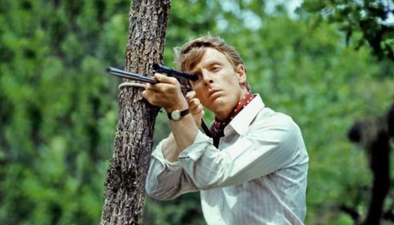
“It’s funny now because there’s Michael Gove right at the heart of government alongside Boris Johnson. Him and many others got furious when The Wind That Shakes the Barley won the Palme d’Or. He lied through his teeth and got absolutely furious about it. He hadn’t seen it but wrote about it. We had great mischief seeing him frothing at the mouth,” said Laverty.
When asked if Gove’s dislike of the film was due to the fact that The Wind That Shakes the Barley upset the conventional narrative by casting the British Empire in an unfavourable light, he had this to say.
“Yes, of course it’s all about occupation. What infuriated them is that we changed the narrative on how Ireland is perceived. Michael Gove hadn’t seen the film and my sister told me – now I’m paraphrasing, I don’t have the exact words in front of me – he said ‘the great lie about this film is that the republicans always had the peaceful way but chose the violent path.’
“But what happened – which we saw in the film with that wonderful scene with Cillian Murphy, the one when he refers back to the election of 1918 – was that Sinn Féin wins 75 out of 103 seats. It has a democratic mandate to break from the British Empire, to have independence. That wasn’t respected after the election. The people who wrote about that and manifested were picked up on the streets and thrown into prison.
“They banned their publications and it was out of that repression – after a democratic vote – that’s when the War of Independence came out. Cillian Murphy’s character says that to the British officer and that’s what infuriated them because they always said that Britain was exporting the rule of law, fairness, democracy. But of course, it was a rule of occupation.
“The film changed the narrative a little bit, that’s why they were frothing at the mouth – The Daily Telegraph, The Times, and the Michael Goves of this world, the people who are now in power in Britain. When you think of it today, we’ve got Boris Johnson, Michael Gove, and the ERG… Rees-Mogg’s now at the heart of government. It just shows you that we’re really in dangerous times if they win the next election.”
For anyone who felt deeply moved by I, Daniel Blake, we’re certain that Sorry We Missed You will have the same impact when it’s released in Irish cinemas on 1 November.
It’s Ken Loach and Paul Laverty at their very best.
Take a look at what’s in store.
Clip via Entertainment One UK
LISTEN: You Must Be Jokin’ podcast – listen to the latest episode now!