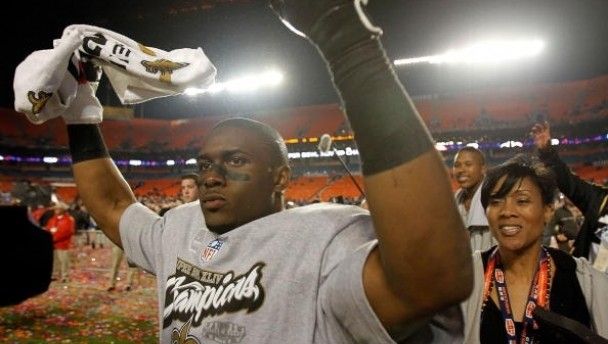
The controversy surrounding Reggie Bush and the Heisman Trophy highlights the imbalance that exists at the heart of college football.
By Sean Nolan
Reggie Bush is a lucky man. At just 25 he has achieved three feats that almost every American male from 14 to 70 aspires to. He has a Super Bowl ring. He has dated Kim Kardashian. And he has won the Heisman Trophy.
While his Super Bowl win last season with the New Orleans Saints can never be taken away from him, it appears – thanks TMZ – that he’s no longer cuddling up to Ms Kardashian. Much more seriously, his 2005 Heisman Trophy might be about to leave his side too.
To understand what this means you have to realise how revered the Heisman is in the States. Perhaps more than any other individual sports trophy, it is imbued with a sense of awe and winners are marked out for the remainder of their days.
Awarded to the “outstanding college football player whose performance best exhibits the pursuit of excellence with integrityâ€, it is not just given to the best college football player that season but someone special, someone who transcends their sport, someone truly above his peers in every sense.
Some winners have tarnished it – step forward one Orenthal James Simpson, winner in 1968 – and others have strayed from the approved path for winners before finding their way again – hello 1998 winner Ricky Williams – but Bush might have to hand his trophy back, something no other player has ever had to do.
Bush won his award in 2005 after a stellar season as a running back for the University of Southern California (USC), incidentally, the same school as Simpson. Bush racked up incredible numbers and led his team to a losing Rose Bowl in January 2006 before being drafted to the New Orleans Saints.
The National Collegiate Athletic Association (NCAA) defends the amateurism of its players with terrific zeal. Despite the schools, the coaches, the television networks and the administrators all getting well paid, the players are not supposed to receive any financial support.
Shortly after he left USC, reports began to circulate that Bush had received improper payments while playing. Bush and the school denied it but the stories would not go away. In November 2007 a sports agent, Lloyd Lake, sued Bush and his family for not repaying $290,000 in gifts.
The NCAA launched a probe into the school’s football programme and in June this year it reported “a lack of institutional control.â€
The NCAA also found that Bush had received lavish gifts from Lake from at least December 2004 onward, including a limousine ride to the 2005 Heisman Trophy presentation. Receiving these benefits meant he was not amateur and was therefore ineligible to play in games after that date.

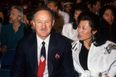
Bush with the Heisman Trophy in 2005
All wins by USC that Bush had been involved in were scrubbed from the records, including the Orange Bowl win in 2005. The team was banned from the post-season for two years and lost over 30 scholarships. In July, the school announced it was returning its copy of Bush’s Heisman trophy.
But Bush still has his. The Heisman awarding committee are still deciding what to do with Bush but it seems they will ask him to return the trophy. It is yet another example of the imbalance that exists at the heart of college football.
Players are ferociously recruited while in high school, but once they set foot on campus, they must never take a dime. Their education is free; a significant financial boon in the US, but that is all they get. Despite the fact that college football is the shop window for the NFL and that the draft is designed to move players from one code to the other, players are meant to avoid all contact with professional players and agents until after their college years are complete.
It is a farcical situation. Bush is not the only one, but he is the most high profile. Georgia player AJ Green is currently serving a four-game suspension for selling a game-worn jersey for $1,000 dollars to what the NCAA deemed an agent.
Dez Bryant, the Dallas Cowboys new star wide receiver, was a potential Heisman winner before being ruled ineligible last year when it was revealed he had met with former NFL player Deion Sanders. Bryant and Sanders had met for lunch – which Bryant paid for – and Sanders had sent Bryant daily inspirational text messages.
Bryant lied to the NCAA about the meetings and for that they ruled that he was guilty of “knowingly furnishing the NCAA or the individual’s institution false or misleading information concerning the individual’s involvement in, or knowledge of, matters relevant to a possible violation of an NCAA regulation.†He was only able to play a month of his final college season for his school Oklahoma State before being banned.
None of the examples cited above affected the players’ on-field performances. No performance enhancing drugs were taken, no illegal activity was undertaken and these young players were left to fend for themselves as sharks circled for their piece of the pie.
The amateur ethos is admirable. It would be more so if everybody was treated the same and if there was not so much money floating around a supposedly Corinthian sport. The NCAA are trying to protect its young athletes, but it would be better if they advised and helped their players graduate to the NFL rather than punish them when they dip their toe into their future potential.
What Bush achieved in college will never be erased. If he does hand back his Heisman, perhaps the NCAA will start to look at the entire structure of their sports rather than targeting often naïve young men.