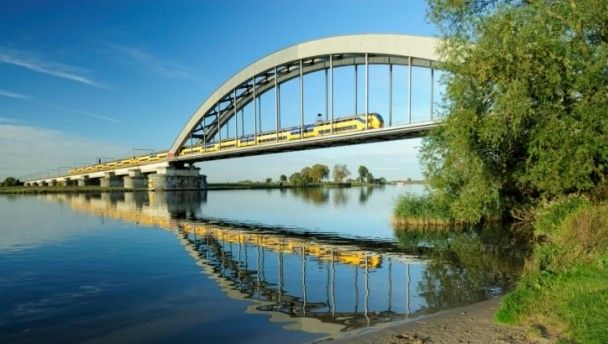
With that cursed volcano in Eyjafjallajokul still causing all sorts of havoc with the travel plans of thousands across Europe and no definitive signs of it stopping anytime soon, it might be worth considering an alternative holiday this summer and travel by land or sea to your chosen destination.
Sure, it might not be as convenient or quick as flying and your choice of locations is somewhat limited, but for this summer at least, it might be worth going a little bit old school and sticking to more traditional forms of transport.
If you want to experience more of what Europe has to offer, there are fewer ways handier or cheaper than buying yourself an inter-rail ticket. For those of you not up to speed, the ticket entitles a user to travel on the rail network in as many as thirty different European countries for up to a month depending on what package is availed of. A global pass covers nearly every country in the European Union while you can also choose to travel in a single country or a combination of countries.
Barring some restrictions on night trains or extremely busy routes, an inter-rail pass grants free rail travel on all trains within the zones designated on the ticket. So conceivably one day, you could be living it up on the wonderful TGV trains in France or the typically efficient German machines, while the next you could be slumming it an overcrowded, rickety and slightly dangerous train in the nether regions of Eastern Europe. All part of the fun, of course.
Get organised
As convenient and all as an inter-rail ticket is, however, this type of holiday places a high premium on organisation skills and cultural awareness of whatever destination you happen to be in. There will be no chauffeur to take you from check in desk to check in desk and if you’re brave enough to request a taxi, don’t be surprised if you pass the same places over and over as your guide tries to wring as much of your fast disappearing travel budget out of your pocket.
Furthermore, we English-speaking types ignorantly take it for granted that everyone we encounter will understand us, or at the very least, they will if we slow down what we are saying and adopt a comical tone (Schteve McLaren style) not even vaguely resembling the accent of the poor unfortunate we are talking to.
And while, luckily for us, plenty of Europeans have at least a bit of pidgin English to respond to a most basic request, a scenario may well arise, particularly in less developed countries, where you turn up at a train station greeted by a receptionist who neither understands nor cares about what you are trying to say. Worse, the only timetable in sight is a crinkly one sellotaped to a window full of what looks to the uneducated eye like a collaboration of randomly assembled numbers and symbols.
Before I put you off the idea of inter-railing completely, don’t be too worried, situations like that are completely avoidable if you’re adequately prepared. You could purchase a handbook that contains some of the most basic foreign phrases and as usual, the internet will always come to the aid of the intrepid traveller.
And here’s a nifty little tip, www.bahn.com contains a comprehensive list of train timetables throughout Europe in English and you can book most journeys via the website. It also includes travel advice and special offers, including accommodation deals.
For more information on inter-rail travel, go to http://www.interrail.net/
Conor Heneghan