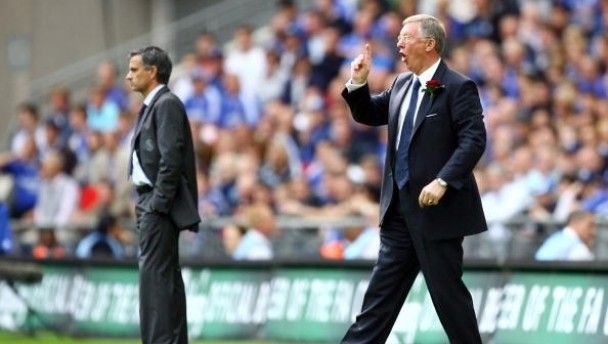
Mourinho, Ferguson, Mickey Harte. This week’s Mind Games column is all about the art of great coaching.
By Kevin Clancy & Enda McNulty
Frank Lampard, the Chelsea and England midfielder, was once asked what made Jose Mourinho such a great manager. “You would go out on the pitch feeling ten feet tall when playing for him,†was Lampard’s response.
It is this gift, more than his undoubted tactical ability, the way he trains a team or organises a backroom staff, which makes Mourinho such a special manager. He makes his players believe in themselves. It is a quality that is shared by all top coaches. As mentioned in this column previously, Mickey Harte, the Tyrone manager, often talks about watching out for the things that his players do well all the time. He is looking for the chance to praise his players at every opportunity, not chastise them as many managers do.
Phil Jackson, the most successful basketball coach in NBA history, adopts a similar approach to both Harte and Mourinho. He believes in building his players up and emphasising their strengths. Jackson is part of a movement, the Positive Coaching Alliance, who endeavour to develop a philosophy, similar to Jackson’s, amongst youth coaches across America. The central component of this approach is what is called the ‘magic ratio’. This says that for every negative that a coach feeds back to a player, he should also provide him with five positives.
It is an approach that Jackson applies in his own dealings with the professional athletes he works with. This philosophy seems to be working well for him considering the eleven NBA titles he has won as a coach with the Chicago Bulls and LA Lakers and the great players he has helped to shape and develop, like Michael Jordan and Kobe Bryant.
Many of the most successful coaches do not have as clear-cut a philosophy as that espoused by the Positive Coaching Alliance, but they do seem to share many elements of its approach. Alex Ferguson, for instance, is a master at understanding what motivates his players. He is fiercely loyal to them. He will never publicly criticises any of his players and is always looking for the thing that drives a player. For some, this might be their country, their own pride, the desire to prove themselves. It could be anything.
The key is that Ferguson will work hard to find out what it is. When Cristiano Ronaldo played for United, Ferguson seemed to challenge the Portugese superstar to go out and prove that he was the best player in the world every time he pulled on a Manchester United jersey. This helped inspire Ronaldo to get the most out of himself and grow into one of the greatest players in the club’s history.
The positive, player-centred approach of the likes of Mourinho, Harte, Jackson and Ferguson has brought much success. And like everything in sport, a lot can be learned by observing the best.
Kevin Clancy and Enda McNulty are Performance Consultants with Motiv8 (www.motiv8.ie).