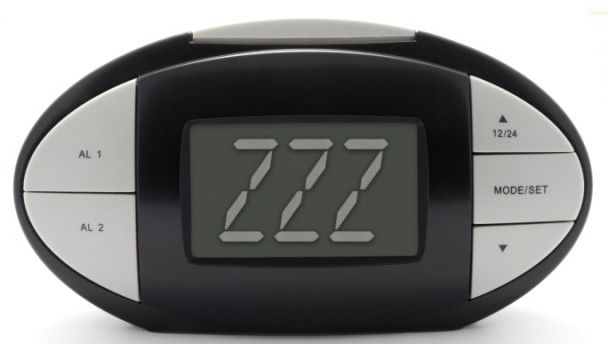
Do you get angry and cranky every morning thinking that you didn’t get enough sleep? Then it’s time for a slight change to your sleeping schedule.
Nearly everyone is aware of the sheer bliss that comes with waking up abruptly in the middle of the night thinking that you have to get up, only to realise that it is in fact 3am and that you have another five beautiful hours underneath the covers.
Unfortunately, such occasions are an all too rare occurrence and are instead replaced by the morning ritual of crankiness, anger and a willingness to breathe fire on the first person to cross your path. But what if you could experience that aforementioned bliss every morning and leave the bed a far happier person with a much more contented outlook on the day ahead?
It’s no miracle; in fact it’s dead easy. Simply set your alarm for an hour earlier than you are supposed to rise in the morning. That might sound like blasphemy to some and although I can’t promise it will satisfy everyone, I am pretty sure there are many out there who will come around to my way of thinking.
Let’s look at it in a practical situation. You’re due to rise at 8am to give you half an hour to get ready before leaving the house in time for work/college etc. Normally, you’d fall out at eight, throw some clothes on, leave half a crust of toast on your face after attempting to gobble down the breakfast and won’t have actually woken up until sometime in the afternoon.
If that’s you in a nut shell, try this. Set your alarm for seven. The shock of being woken up so early will hit hard at first, but you can relieve it with a flick of the snooze button, a trick that can be repeated five more times until you have to actually get up at eight. The impact of having to get up immediately is drastically reduced and you’ll eventually leave the covers with a spring in your step.
In practise then, you’re not actually saving any actual time at all, but you’ll feel like you’ve had far, far longer in the sack. There are, however, a couple things to take into consideration.
#1 Beware of your fellow slumberers.
I once had a job when I was living in Australia that required me to leave the house at 5am. Following the routine mentioned above, I regularly fixed my alarm for 3.30am and enjoyed a nice one hour lie-in which was all well and good for me, but not for my two mates sharing the room with me (I lived in a house with 15 people at this stage).
Seeing as they were rarely home before 3.30am it wasn’t an awful big deal, but there were times when my phone was chucked into the bushes outside.
The lesson to be learned then is that it’s fine when you have a room to yourself, but don’t get others involved. Unless, of course, they are active practitioners of the theory and have a similar schedule to yourself.
#2 Know when to stop
When you’re pressing the snooze button five times a morning, the temptation is there to push the boat out a bit. What’s another ten minutes, after all? All of a sudden, ten becomes 20 and 20 becomes half an hour. Discipline is essential, and I know how ridiculous that sounds considering what I’m advocating here.
Anyway, I’m not going to claim that this theory is bulletproof, far from it. It’s certainly a bit wacky and open to complete ridicule, but it works for me and I’ve found many supporters for it over the years.
They, like me, believe that when it comes to sleep that if you snooze, you definitely don’t lose – ridiculously corny as that sounds.